Origin Story: A Big History of Everything, By David Christian

RATING

3 stars

N/A = good but not on the scale

1 star = perspective supplementing

2 stars = perspective influencing

3 stars = perspective altering

SHORT SUMMARY (272 words or less)

On the surface, this book attempts a big task:  to tell the story of the Universe, and ultimately the biological and social evolution of humans. A story from the Big Bang to the end of the Universe.  Of course, the book is more nuanced than that.  The real idea is to build a unified view, rooted in science, of how everything, including us, originated.  Hopefully, that common understanding will establish a starting platform from which science-based decisions and polices can be made.  Thus, the name for the book and also the underlying Big History Project.

The themes of Origin Story are important.  From the human perspective, if we don’t understand our origin, based on science and facts, then the ignorance that creeps in could ultimately distract and destroy our ability to sustain as a species.  In a larger sense, the origin story told here is humbling too–it give us a very real understanding that our mere existence in space and time is fleeting.

And yet, whether we know this or not, we go through our lives with a remarkable ability to understand our place in all of it. This is incredibly profound.  And we have developed cognitive tricks (like language, knowledge sharing, culture, social customs) to change our evolutionary trajectory faster than our biology ever would allow.

My take away from this book, and others read recently, is that culture matters.  And a culture rooted in science and scientific inquiry may be the only path forward for our sustained existence.

I’ll stop short of saying that this is a must read; however the information contained within it is a must know.

LONG SUMMARY  (Key takeaways–more thoughts)

It’s taking me a long time to write this.  There is a lot that I want to say, but not a lot that I want to summarize.  I’ll try my best.

Origin Story is an attempt to tell a science-based narrative of the origin of the Universe, life on Earth, and ultimately the fate of it all.  The author, David Christian, uses ten cosmic “threshold events” as milestones to mark periods of importance in this timeline. These threshold events are:  (1) The Big Bang; (2) the appearance of the first stars; (3) the appearance of new elements; (4) the formation of the Sun and our solar system; (5) earliest forms of life on Earth; (6) earliest signs of our species; (7) the beginning of farming; (8) use of fossil fuels; (9 – future) a sustainable world order; (10 – future) the end of the Universe.

As I think about summarizing Origin Story, it feels like there are two tracks of thinking going on in my mind.  One is the attempt for objective understanding of the past and future, and the threshold events the author describes. The other is a series of subjective observations–injecting questions of what these explanations mean for me.  For my beliefs.  For the consequences on my family, my life, our society, our species, our planet.  Track one finds meaning within the explanations themselves; track two extrapolates meaning with biases rooted in my human experience.

For example, the explanation of the Cosmic Microwave Background Radiation (CMBR) as evidence and proof of The Big Bang, is based in chemistry and physics that is absolutely fascinating to learn objectively.  But then, when you look at it subjectively from the human perspective you realize that the human brain, a three pound organ that sits in our skull, is able to figure all of this out. That we have the cognitive capacity to even ask the most fundamental questions of existence, come up with theories, and then verify that the theory is correct by observing the CMBR.

Another example–it’s a fundamental concept from the objective perspective that matter and energy are basically the same thing.  But from my subjective perspective, the simplicity of the Einstein’s most famous equation is downright spiritual.  The formation of the sun, planets, Earth, atmosphere, plate tectonics–all fortuitous in the objective perspective, frighteningly rare in the subjective lens.  The development of life.  The mass extinction events.  The Cambrian life explosion.  Photosynthesis.  Primates.  Bipedalism.  Language, agriculture, energy capture, war, etc.  You get what I’m saying

One takeaway for me is the notion that on the human scale, our existence in the Universe is a sliver of a sliver of a sliver of time and space.  An existence that could have likely just been a physical and chemical accident.  And yet, through some evolutionary breaks, human consciousness broke through.  We developed the cognitive abilities to free ourselves from traveling only the slow paths of biological evolution and chemical change.  We developed Theory of Mind and became self aware, we crossed a linguistic threshold that enabled us to share knowledge and develop culture.  We have been able to stand on the shoulders of our ancestors for millennia.

When we crossed these barriers, we expanded beyond our biological destiny to exist as mere foragers and used culture to tame the land, organize in large numbers, transform energy, expand through the world and ultimately own the biosphere.  All in a matter of 200,000 years when the human species first appear.  If you put 200,000 years on a relative cosmic timeline (where the Big Bang started 13 years 8 months ago, instead of 13.8 billion years ago), 200,000 years amounts to just 100 minutes ago on the cosmic clock.  What did you do in the last hour and half?

We’ve become masters of the world and everything in it, but we have done so at the expense of the biosphere itself and soon, at the expense of ourselves. Geologists now agree that the Earth is likely entering another mass extinction event, but this one is caused by human activity instead of a meteor or super volcano or natural ice age.   Even when the terrifying Jurassic Park dinosaurs were around, they weren’t able to eradicate life in the biosphere in the capacity and magnitude which we are now able.

Our development of human culture got us to where we are, all the good and bad, but it also empowers us to change our destiny.  We have the tools to understand our past and can project our future, and we have the potential to organize ourselves in a way to sustain that future.  This unique ability to develop culture may ultimately save us.

I know that all sounds flowery and too head-in-the-clouds, but the amazing thing about it is, scientifically speaking, it’s actually true.  And that’s an amazing thing to realize.  For example, our brains likely grew bigger because our ancestors figured out how to use fire and cook our food.  So when we stopped eating raw meat, we could dedicate more energy to developing our brains.  Thus, in our minds we developed larger cortex regions relative to other animals, which carries out most of our language processing functions.  Language development lead to shared knowledge, and abstract thinking, which lead to social organization, farming, agrarian and industrial societies.  In another example, about 7 million years ago, a hominid ancestor decided to stand on two legs, probably to run faster on the African savanna.  That bipedal trait was naturally selected to pass through generations, ultimately to us.  Human bodies went through physiological changes when they stood upright, including longer spines and narrower hips.  So when it came time for kids to be born, the babies had to be smaller to pass through a narrower birth canal.  Thus, babies have to develop for quite some time after birth, and those that were more apt to survive were those that belonged to social structures that supported nurturing of that offspring long after birth.

On the larger scale, the origin story told in Origin Story is almost mystical.  Yet is rooted in scientific verification.  To me, there’s something magical about the four forces of gravity, electromagneticism, and the strong and weak nuclear forces, emerging as the Universe’s operating system after The Big Bang.  And there’s something even more magical and elegant about some of laws of physics.  That matter and energy really are the same thing, and their relationship can be explained by an equation capable of being done by a fifth grader.  Maxwell’s equations have a similar elegance uniting electricity and magnetism.  The duality of charged particles, electrons and protons, matter and antimatter.  Even moving away from large scale physics, the DNA structure and capabilities, and how it codes for genetic information and self replicates.  Photosynthesis and the Great Oxygen Revolution, the ability for life to figure out how to convert energy from the sunlight into food, and work. Humans to learn things, pass them down their progeny, and take over the world faster than any species ever could.

As the book discusses the growth and development of human societies, the author makes one point clear. Just like energy and matter are the same thing, in different forms, human wealth (and power) and energy are also the same thing, in different forms.  The idea is that when our species first started farming, we were able to utilize more of the photonic energy present on the Earth (example:  when we were just foragers, we wouldn’t eat grass, but when we domesticated cows, we would have them eat the grass, and then we would utilize them for work and for food).

As agrarian society learned out to cultivate these resources, they grew and developed.  As agrarian societies and leaders learned how to control these resources, they became powerful.  The societies grew to empires, which often used their power to expand (physically and economically) into areas with less power.  As the fossil fuel revolution was born, societies  and countries that were once relatively powerless became quite powerful, including many countries in Western Europe.  The fossil fuel revolution transitioned societies from agrarian powers to industrial powers, and these powers eventually fought one another, in the World Wars of the early 20th century.

The author indicates that we are now at a threshold point of existence in the biosphere, with a status that no other species has obtained:  complete control over the Earth and it’s resources, and an ability to control our future.  The author raises facts about climate change, greenhouse gas emissions, water shortages, all that point to an inflection point coming to the human species in the next century and a half.  The book concludes with a choice:  two paths for humans to take–one is the law of the fish.  Where our blind pursuit of growth and unchecked and irresponsible consumption ultimately hits a crisis point, and we devolve away from the potential to collectively control our fate.  The second path is a collective decision to build a sustainable world order, where we can work to create conditions to ensure the long term survival of our species.  The author believes that what happens in the next 150 years or so will have long term implications for our species, thousands of years later.

So, why am I going on and on about this stuff?  Well, after reading this book, to me, a starting point for us to collectively solve our problems–both man made and natural–must come from some common understandings of where we come from, what our limits are, and where the danger thresholds exist.  That can only come from an origin story that is rooted in science and a society that cares about science literacy.

This book, and The Big History Project, is an attempt to do just that.

Three stars.

SCRIBBLES  (Notes as I read along)

I started listening to this book after reading Bill Gates’ 2018 summer reading recommendation.  Apparently Bill Gates and the author, David Christian, started something known as The Big History Project  , which according to Wikipedia is an attempt to generate a unified understanding of “Cosmos, Earth, Life, and Humanity.”  Sounds interesting, I’ll have to check it out when I finish this book.

I’ve listened to about 2 hours of the book so far.  My initial impression is very positive.  It’s a lot like Bill Bryson’s A Short History of Nearly Everything, but so far, in my opinion, the explanations are a bit deeper.  Also, the thesis is a bit different with this book.  Here, the author’s purpose is to try to explain a universal origin story that captures the development of the “cosmos, earth, life and humanity” (as described above for The Big History Project).  In this pursuit, the author focuses on ten critical origin story thresholds–from the Big Bang to the end of the Universe.  He puts these thresholds on a relative timeline so that human minds can understand it.  Basically, he takes a timeline and divides it by 1 billion.  You’ll see this below:

Threshold 1:  The Big Bang

Absolute date 13.8 billion years ago

Relative date:  13 years 8 months ago

Threshold 2:  First stars

Absolute date:  13.2 billion years ago

Relative date:  13 years 2 months ago

Threshold 3:  New elements formed

Absolute date:  Continuously from threshold 2 to today

Relative date:  same

Threshold 4:  Formation of sun and solar system

Absolute date:  4.5 billion years ago

Relative date:  4 years 6 months ago

Threshold 5:  Earliest life on Earth

Absolute date:  3.8 billion years ago

Relative date:  3 years 9 months ago

Threshold 6:  First evidence of our species

Absolute date:  200,000 years ago

Relative date:  100 minutes ago

Threshold 7:  End of the last ice age; earliest signs of farming

Absolute date:  10,000 years ago

Relative date:  5 minutes ago

Threshold 8:  Fossil fuel revolution

Absolute date:  200 years ago

Relative date:  6 seconds ago

Threshold 9 (?):  Sustainable world order

Absolute date:  100 years in the future (?)

Relative date:  3 seconds to go (?)

Threshold 10:  The universe ends in entropy chaos

Absolute date:  Billions and Billions of years in the future

Relative date:  Billions and billions of years in the future

There are other major events not captured in these thresholds but described in the book–e.g., asteroid that killed the dinosaurs, first cities; man landing on the moon; death of the sun, etc.

-So, there’s a caveat to this summary.  There’s way too much in this book to try to summarize.  It’s packed with a lot of information, most of which I find to be very interesting, but to rewrite a summary would mean that the summary would be twice as long as the book.  So I’m going to capture the main things that jump out at me.

-The four forces.  Shortly after the big bang, physics provided the “operating system” of the universe.  This came in the form of the four fundamental sources–gravity, electromagnetism, the strong nuclear force and the weak nuclear force.  It’s sort of unclear why these four rules came forth–they just did.  To me, this is one of the more interesting pieces–that the fundamental rules of physics just kind of came about.  Maybe in another Universe or in another set of circumstances, different physical forces exist and/or exist in different relative intensities.  The four forces dictated the specific energy pathways which could exist in the Universe.

-The four forces are a result of energy itself undergoing a phase change very early in the Universe.  A billionth of a billionth of a billionth of a billionth of a second after the Big Bang, the four forces emerged.

-Gravity is weak but reaches across vast distances.

-Electromagnetic energy comes in positive and negative forms, so it often cancels each other out.  Gravity works on large scales, electromagnetism on small scales, chemistry and biology.

-The strong and weak nuclear forces reach over small distances, so they matter on a subatomic scale.  On the human scale, we don’t experience them directly.  But they determine what happens inside atoms.

-There may be other types of energy and mass–antigravity and dark energy.  It may account for why the Universe is expanding, but contemporary science doesn’t explain this.

-The author explains the big bang kind of originating from this tension of nothing-ness and something-ness.  That is, the big bang just kind of bootstrapped itself, and out of a nothingness, the primordial singularity kind of came to being and then exploded.  This is where the mystical meets the science.  The author references some ancient Vedic texts that mention the before the Universe existed both nothing and something.

-The cosmic microwave background radiation (CMBR) is the proof that the big bang existed.  Basically, the CMBR consists of photos that leaked out of an early plasma state in the universe.  I don’t know if I can fully explain it, but it goes something like, before the electromagnetic force attracted early protons and electrons together, all of these subatomic particles, including photos, existed in a sort of energy plasma.  When the Universe cooled and the electrons and protons paired up, the photos leaked out of the plasma into a charge-less universe, as basically we can measure trace elements of that leakage in the CMBR.  That’s how we know that the big bang happened.

-After the big bang, there was a phase of super expansion of the Universe where things were flung across the Universe so fast that we probably will never see them.  Then the super expansion slowed, and things cooled.  Average temperature of the Universe is 2.76 degrees above Absolute Zero.

-As temperatures dropped, the possibilities of potential matter narrowed.

-E=mc^2.  Energy and mass are the same thing.  A small amount of matter can be converted to a huge amount of energy.  Think the atomic bomb.  Matter is just a compressed form of energy.

-One thing to note about the formula.  To me, it’s incredibly profound of simple that formula is to explain an exact relationship between two fundamental concepts of the Universe.  Think about that.  Matter and energy are translated through a very simple equation–is there something even more simple going on beyond what we can understand?

-Formation of life.  Complex adaptive systems must survive the customs of local environment, and thus all forms of life must develop mechanisms to understand local information.  All of life is information-vores.  They all consume information.  Perhaps what makes human’s unique is language that allows us to pass vast amounts of information to each other.

-A brief discussion of entropy.  Entropy is the idea that over time, matter and energy will descend to a state of randomness or chaos.  So in order to have ordered systems as time moves on, there’s a certain tax to be paid to entropy.  An entropy “energy tax”–that is, it costs energy to make systems more orderly.  Entropy likes this, because ultimately, the energy tax will cause resulting systems to decay into chaos much faster.

-More complexity means more information – and the entropy tax requires energy to be expended for the complexity.  Some say that because life requires organized systems of information and matter, and because such organized systems pay a high entropy tax, entropy may actually encourage life to exist throughout the Universe because life degrades free energy to entropy very efficiently.

-Defining life:  how to distinguish life from nonlife?  Most modern definitions include the following five features for life:

  1.  Most living organisms consist of cells with semi permeable membranes
  2. Life has metabolism that can tap free energy from its surrounds to rearrange molecules and atoms efficiently with complexity.
  3. Life can adjust to changing environments through homeostasis.
  4. Life can reproduce using genetic information to make copies of themselves
  5. Over generations the copies slowly change to changing environments.

-Interesting factoid:  Human beings consume about 120 Joules of energy per second, or 120 watts.  Similar to a light bulb.

-Tiny genetic changes give life it’s resilience.  Random changes create different templates that are randomly changing.  This is the heart of natural selection.  Natural selection means that tiny random changes will lead to more favorable changes relative to local environments to be propagated through generations.  Natural selection links necessity and chance.

-Goldilocks conditions for life:

  1. Our sun is located in the right location in the Milky Way.  Not too close to the chaotic center of the galaxy
  2. Chemistry works well in lower temperatures–rich chemistry occurs in habitable  zones in areas close to stars but not too close.  Earth is located in the right zone relative to the Sun.  But some other planets and moons may have internal furnaces (e.g. geothermal source) to make it acceptable for life.
  3. Presence of liquids–atoms and molecules can mix together.  Planets that lie between 0 to 100 degrees Celsius allow for water to exist in all states.
  4. Chemical diversity–lots of chemical atoms to mix together.  Chemistry needs rare environments where other elements are found.

-There’s a lot of discussion on the formation of life.  I might have to go back and listen, because it was really well explained, and I’d like to get it a second or third time.  Some things I remember are below.

-LUCA – stands for last universal common ancenstor.  It’s a scientific abstract to understand when the formation of life happened on earth and what differentiation points existed between molecules and molecular life.

-ATP – uses proton energy from food to create an electrical potential in the cell and thus do work (or something like that).

-DNA and RNA–the C-G, A-T (U in RNA) nucelotides pairs allow for genetic information to be passed through replication, almost like a code.  A certain nucelotide sequence represents specific genetic sequence.

-Plate techtonics – internal thermostate; Wagner’s theories discounted

-Photosyntehsis – takes photon energy and converts it to useful work to sustain plantlife. Human’s in turn gain this energy through food.

-Oxygen revolution – atmosphere changed 2.5 billion years ago when prokaryotic and eukaryotic life released oxygen from photosynthesis.  This created a shit ton of oxygen in the atmosphere and allowed for greater biodiversification (read the Wikipedia article on the Great Oxygenation Event if you’re so inclined). At high levels, oxygen is toxic, but at the levels we currently have, system of respiration allows us to combine carbon from carbohydrates and oxygen to do work, and expel carbon dioxide as a biproduct.

-Plate technoics + biosphere enables an internal thermostate + homeostasis for Earth.  Other planets in the goldilocks zone of our solar system have not been able to sustain life without similar mechanisms.  Venus–no way for it to cool down the runaway greenhouse gas temperatures; Mars–no way for it to heat up.

-Lot of discussion of early life, which is super interesting, but too detailed to recount here.

-The asteroid that wiped out the dinosaurs created such catastrophic change in a matter of hours and ultimately a few years of no sun killed most life on Earth.  That’s incredibly humbling–life then was around for millions of years, and within hours, it was wiped out.

-Primates and humans.  The human brain evolved with a larger neocortex relative to other animals’ and size. The development of a “brain” in animals is actually counterintuitive.  Our brain and many other animal brains consume a ton of energy, way more than their size relative to the entire body.  So similar to the “entropy tax” we kind of pay a “brain tax”–we have an organ that is an energy sink, but that helps us synthesize complex information.

-Humans and chimps descended from a common ancestor about 8 million years ago.  We know this by looking at DNA and genes across us and chimps and see a divergence in the code that would line up with being about 8 M years ago.

-Lot of interesting things here–how the use of fire may have caused us to need a smaller stomach, and thus more energy could be dedicated to developing the brain.

Also, interesting fact, for some reason, our genus homo started standing up about 7 million years ago.  No one knows why–one theory is that it helps us hunt faster in the savannah.  Well, because our evolutionary ancestors, and us, stood upright and became bipedal, that lead to a series of anatomical changes over generations and across species.  Homo sapiens elongated their spines, and this caused other anatomical changes, such as narrower hips. Narrower hips meant that human offspring are born when they are not fully developed mentally and physically.  Thus, humans need to stay with their offspring for many years, and this encouraged and evolutionarily rewarded good socialization–humanoids that could work together well had a better chance that their offspring would survive.  This may have encouraged humans to get together in communities and to have fathers stay present with their offspring.  Accordingly, to survive and have our offspring survive, our brains may have developed to hone these socialization and problem solving skills.  Really interesting to think, that all of society and culture may be resulting from the fact that somewhere, 7 million years ago, a primate decided to stand up in an African savanna.

-The book goes through the idea of cultural evolution vs. biological evolution.  He uses an analogy–what if an alien civilization was observing our planet for the last several million years.  For most of it, they would observe life on Earth but probably not find anything particularly remarkable.  But as humans come on board, within a span of 200,000 years, they basically have taken over the Earth and have the capacity to alter the biosphere and environment.  The author makes a point of cultural evolution–it’s the ability for humans to gather knowledge and cultivate/domesticate it, and then to pass ideas along across generations that makes us unique.

-Language–one of the biggest differentiating factor for humans than any other animal that ever lived is our ability to communicate with abstract language.  We are not the only life form that has language, but we are the only ones that can speak abstractly about things that are not in front of us.  Chimps can communicate an learn words, but they cannot communicate ideas like “the lions might come here tomorrow.”  They can only say things like “look over there at the lion.”

-The ability to communicate abstractly allows us to communicate to each other very complex information efficiently.  I like the analogy the author uses.  Language enables humans to communicate a complex spaghetti of information in easily transformed mechanisms of speech and text, and the recipient of the language can unfurl the tangled spaghetti to understand the deeper an complex ideas contained therein.  Somewhere at sometime, humans crossed what’s called the “linguistic threshold” that enabled our species to use language as the mechanism to capture and record abstract information and share it across generations and amongst each other.

-Humans have been farming for only 10,000 years.  But the start of human farming was tantamount to a revolution, much like photosynthesis was.  Human farming enabled humans to capture more of the photosynthetic energy present in the biosphere than foraging did.  And thus, it allowed them to live in more complex ways.  For example, humans don’t eat grass, but they could capitalize on the photosynthetic energy of grass by allowing horses and cattle to graze there, and then get those animals to do work or kill them and eat their meat.  In initial farming societies, probably everyone had to learn how to do it, but as farming techniques became more efficient and were passed down from generation to generation, humans were able to create surpluses, and thus everyone did not need to learn how to farm.  The question then, what happens to the surplus and who gets to own that?

Remember, cultural evolution happens rapidly, biological evolution slowly.  So with surpluses came people grabbing power and forming class systems.  Agrarian societies also “produced” more humans than were needed to sustain themselves, so the excess people were often forced to work in other ways.  It seems like humans domestication and control of the biosphere gave the human race as a whole the best chance for survival and propagation, but with that came other challenges on how societies organized themselves.  The human psychology, it’s thought, evolved to handle really only 150 close connections.  Agrarian societies grew larger than that, so new cultural adaptations, for better and for worse, arose to all humans to compensate against biological limits.

Earth, water, sun,

-The last portion of the book is a brief exposition on development of human society.  From the small agrarian states that developed ~10,000 years ago, to the current human ecological domination of the biosphere.

-The author poses an interesting theme:  all wealth is sunlight.  That is, all wealth through the course of human history is somehow tied to control or consumption (direct or indirect) of energy.  And almost all useful energy on the planet originates from sunlight.  So, maybe we all are sun worshipers in one sense or another.

-The author discusses the European “discovery” of the Americas by Christopher Columbus as a major event in human history.  It enabled European powers to gain strength and ultimately overtake older civilizations in strength and control.

-Author suggest that the countries and civilizations that have controlled modern power were able to capitalize on the use of fossil fuel technology.  E.g., England defeating China in the Opium Wars.

-There’s a lot more in this part that is really interesting.  I don’t remember it all because I listened to it for three hours straight while on a run, but the author’s main point here is that human progress and the march of civilizations have been tied to our ability to use energy and set up surrounding social systems, for better or worse.  And now, the author believes that we are heading into a critical time in human history–the next hundred years will determine how humans will live for many years afterwards.  This is mainly due to the effects of climate change– and the rate at which CO2 and Methane are being pumped back into our atmosphere.  Author suggests that we are on two paths:  one where we emphasize economic growth over everything, at the risk of the climate and the biosphere, and once our damage there is done, we revert back to the “law of the fish”; the other, where we collectively come together to build a sustainable world order, in which systems are set up to enable long term human social survival.

The Radical King, words of Martin Luther King Jr., organized and edited by Cornel West

Letter From Birmingham Jail - The Atlantic

RATING:

3 stars

0 stars = good but not on the scale

1 star = perspective supplementing

2 stars = perspective influencing

3 stars = perspective altering

SHORT SUMMARY

What can I really say in 272 words?  Read this book.  It will change your perspective.

It’s an impossible task to summarize Dr. King’s words.  So instead of doing that, just some random thoughts:

-Cornel West has a theory that King has been mythologized and “Santa Claus-ified.”  To the point where his own words today have been scrubbed so clean that they have separated from the underlying message and can be used even by those, ignorantly or deliberately, who entirely ignore King’s larger points.  I have been guilty of that, quoting MLK because the words sound nice.  But this is the first time that I have truly listened to what he had to say.

-West’s thesis in putting together this collection is to demonstrate King’s “Gandhian” view of radical love–direct action to unconditionally oppose injustice while maintaining unconditional love for the active and passive oppressors instituting these injustices.

-King’s evolution on radical love ebbed and flowed with human feelings of victory and defeat.  His optimism is clear in many speeches, and his resignations also become clear too, particularly toward the end of his life.

-I’m now not surprised at how controversial King was during the Civil Rights Era.  He posed a threat to the status quo.  He lost his life because of that.  His movement represented a tangible mechanism to awaken the country’s collective soul, at a time in American History when society was most susceptible to awakening.  His message of economic and social transformation started with the struggle of African Americans, but if fully implemented, would have likely spoken for all Americans who had been subjugated or marginalized.

-Read this book.

LONG SUMMARY

This book is a compilation of excerpts from Dr. Martin Luther King Jr.’s speeches and personal records.  The King family is known for being incredibly protective of the copyrights for Dr. King’s speeches and texts.

In this book, Cornel West provides the introduction, but it’s King’s text and words that comprise the majority of story.  The King family granted special use of these copyrighted words.

I’ll try to summarize my thoughts as best I can.

Introduction

-The intro chapter comes from Dr. Cornel West.  He provides a over-arching dialogue of the importance of King’s words, not just from the traditional adoration that we put on him, but drills down further into what King’s cause really was about, and how his radical pursuit of racial and economic justice made him watched and feared by many of those in power, including the federal government.  West provides an interesting discussion of King’s faith, and how his interpretation of Christianity extends from traditional sources and also from Nietzche to Gandhi.  West concludes that his adoption of Gandhi’s edict of nonviolence and love for the oppressor but not the oppression was the final step in King’s evolution as a Christian civil rights leader.  This becomes clear in King’s Palm Sunday service on the life of Gandhi.

The violence of desperate men

*This chapter is from King’s memoir about the Montgomery Bus Boycott.  The memoir is called Stride Towards Freedom*

-The first chapter comprises excerpts from King’s writings during the Montgomery Bus Boycott.  It starts with a description of an event where King’s house in Montgomery was bombed in retaliation for the success of the boycott.  In this excerpt, King describes with humanity the newly dawned fear for his family and addresses the issue of violence and violent retaliation.  He goes so far to say that if he were to die, he instructs not a single person in his movement to raise a hand in violence.   Sadly, King’s admonition was not heeded, as the world bore witness to the riots following King’s assassination in 1968.

For me, one of the interesting parts of this writing is how fragile King believed the nonviolent ethos to be.  Shortly after the bombing, his supporters gathered in the streets, and King goes so far to say that if one of his supporters had so much as tripped on a brick, it would have lit a fire and possibly turned violent, because the atmosphere was a tinderbox waiting to explode.

It is also interesting to see King’s consistent belief in the presence of the Divine spirit in his midst.  He believed that Montgomery did not descend into chaos and bloodshed that night because the grace of God was with them.

King was later arrested for violating an obscure law against unlawful protests.  King’s trial was watched by people from around the country and the world.  King was convicted of the crime and was sentenced to prison.  His supporters wore pins that said “forgive them Lord, for they know not what they do.”

Palm Sunday Sermon on Gandhi

*This chapter is from King’s sermon on Palm Sunday 1959 in Montgomery*

-In 1959, 11 years after Gandhi was assassinated, and nine years before he himself would be too, King delivered a sermon on the life of Gandhi.

-In his sermon, King believes that Gandhi “more than anybody else in the history of the modern world had caught the spirit of Jesus Christ.”  King goes on to discuss the ultimate irony of how the most spirited Christian of the 20th century was not in fact even a Christian.  He goes on to quote scripture:  “I have other sheep, which are not of this fold.”  King’s belief is that Christ would have seen Gandhi in this light, not a member of the structures of his teachings, but a disciple in the spirit of them.

-King describes Gandhi’s evolution and development of the nonviolent protest philosophy.  Turn the other cheek.  Blessed are the meek, for they shall inherit the earth.  Writings of Thoreau and Tolstoy who, according to King, informed Gandhi to learn a truth that oppression can be rejected while the oppressor can be loved.

-It seems like Dr. King was heavily influenced by Gandhi’s nonviolent resistance movement from an early age.  King quotes Christ:  “Greater works shall ye do” and extends that to Gandhi, saying that a non-Christian has extended the teachings of Christ more than anyone else.

-One haunting portion of the King’s sermon is his observation that though Gandhi was one of the greatest men in history, the world does not like people like him.  He says:  “And the final thing that I would like to say to you this morning is that the world
doesn’t like people like Gandhi. That’s strange, isn’t it? They don’t like people
like Christ. They don’t like people like Abraham Lincoln. They kill them.”  The prophetic nature of that statement is haunting.

Here is a link to the Palm Sunday Sermon.  It’s worth reading.

Pilmgrammage to nonviolence

*From Stride Toward Freedom, The Montgomery Story. Also published in Christian Century Magazine in 1960.

-In this chapter, King provides a glimpse into his philosophical evolution, and his ultimate arrival to Gandhi’s Satyagraha philosophy.  King believes that it is this philosophy which is the most pragmatic and the most aligned with his Christian views to bring about change.

-He views Satyagraha as a social extension of what he previously believed to be a personal application of nonviolence.  Before Gandhi, King saw biblical decrees like “turn the other cheek” as applicable to only a personal philosophy, not one that could be extended to society at large.

-King goes through a discussion of why he disagrees with communism, mainly because it’s lack of belief in a God and a resulting lack of immutable moral anchors from which people can be exploited.

-One of the interesting things for me in this chapter was how King is so intensely intellectually curious.  He follows philosophical doctrines to their conclusions, thinks deeply about them, and then decides if he agrees or disagrees. based on his own experience, priorities, and perspectives.

-Kings interpretations of passivism: it’s not a passive resistance to power, it is an active resistance to power by choosing nonviolence and eliciting a transformation and moral awakening in the oppressor. In this regard, King views the oppressor and the oppressed as allies against injustice and that the oppressors are simply actors in enabling injustice.

-King saw passivism as a realistic passivism, not as a moral absolutism. That those who practice passivism should not assert moral superiority over those who they are resisting

-Personal idealism (“personalism”) – King says that this is the core of his philosophical belief. Gave him a grounding of a belief in personal spirituality.

-King leaves his doctoral studies believing that Nonviolent resistance was one of the core tools available for oppressed people.

-King ties the Sermon on the amount to Gandhian views of nonviolence. He believes he solidified this is a practical way during the Montgomery protests.

-Kings tenants of nonviolent resistance:

(1) Nonviolent resistance is not for cowards. If one resists because of cowardly acts, he quotes Gandhi as that it’s better to fight. “Not a method of stangnant passivity”- It’s not a passive method to resist evil, it’s an active, Nonviolent method.

(2) purpose is not to defeat opponent, but rather to win the friendship of their opponents and to awaken their morality. The goal is redemption and reconciliation between oppressor and oppressed.

(3) directed against the forces of evil, not against persons doing the evil.

(4) willingness to accept suffering without retaliation. Unearned suffering is redemptive for the nonviolent resistor. Quoting Gandhi: “Things of fundamental importance to people are not secured by reason alone, but have to be purchased with their suffering.”

(5) Nonviolent resistance avoids external violence but also internal violence of ones own spirit. Oppressed people cannot succumb to hate or bitterness. Have to cut off the chain of hate.

-King expouses in the words for love in Ancient Greek. Three words for love in Greek: Eros – romantic love; Philia – the love between friends, reciprocal love because one is loved; and Agape- means understanding, loving those who oppose us, redeeming goodwill for all men. King quoted 1 Corinthians 10:24 to define it in a biblical context. Response to a human need, not a reciprocal one. King quotes Agape as an active love that encourages community and sacrifice and forgiveness. And the focus on interrelatedness of humanity.

-Quotes Booker T Washington: “Let no man pull you so low as to hate him.”

(6) Nonviolent resistance is based on the belief that the universe is on the side of justice. And it provides those who struggle with cosmic companionship.

Loving your enemies

*Revised his “loving your enemies” sermon during a stint in jail in Albany, Georgia, arrested for participating in peaceful protests during The Albany Movement*

-This excerpt is an extension of some of the themes noted above.  Namely the requirement and ability to love your enemies, even in the face of their oppression of you.  King talks about his agape philosophy again.

Where do we go from here

I’ve been meaning to write a summary about this excerpt for a long time.  I’ve listened to it about three times, and there is just so much in there that, more than enough to recap.  My main thoughts are below.

King writes that for all the scientific and technological advancements in the Western world, we suffer from a spiritual deficit.

King mentions the idea of indebtness to mankind.  We are already living in the red, owing a debt to people all around the world, every day, even as passive consumers in society, and we own this debt to people known and unknown, dead and living.

King also portends that spiritual bankruptcy and a moral slumber can bring about the end of western dominance.  He talks about the story of Rip Van Winkle–how before Rip Van Winkle went up to the mountain to slumber for 20 years, he stayed at an inn.  Before he went up, the sign on the inn had a picture of King George III.  While he slumbered, he slept through the American Revolution, and when he came down, George III was replaced by George Washington on that inn sign.  King uses this analogy to indicate how too many of us are asleep or passively indifferent during times that call for social revolution, and that it is important to “stay awake.”  Perhaps this is where the term “stay woke” originated?

King’s discussion on religon

Dr. King seems like he would be my kind of spiritual leader.  He unequivocally affirms his faith in Christ as a savior, as that is his personal belief and path towards redemption, but simultaneously he does not exclude other faiths from having their own access to the divine.  In this excerpt, King states his belief that God has revealed himself in different spiritual forms to all religions and spiritual seekers in the world, and that we cannot be so short sighted to see truth in only one doctrine.  It’s a very eastern view for a western Christian leader to have.

Tribute to DuBois

In an excerpt that King delivered after W.E.B. DuBois’ death, he mentioned something that stuck out to me.  King viewed DuBois as a defender of truth narrative of the black and African experience in North America.  His view was that DuBois preserved for historical accuracy the successes of black Americans during Reconstruction and postulated an argument that the promoters of systemic racism use techniques to erase history and identity as a way to control and subjugate those who are oppressed.  It is an interesting idea, the duality of the physical control of enslavement and systemic discrimination as well as the psychological control over history and identity.

Letter from Birmingham Jail

I summarized this one here.

The Drum Major Instinct – Sermon delivered at Ebenezer Baptist Church

This speech, and the next one in the book (King’s “I have been to the mountaintop” speech) culminate the anthology.  They are two incredibly powerful speeches, both foreshadow his death and provide his own commentary on how he wants his life to be remembered.

The speech here is commonly referred to as the Drum Major Speech.  In this speech, MLK builds on a work titled the “Drum Major Instinct” by J Wallace Hamilton, and builds a spiritual case for channeling innate desires for self-interest and self-fulfillment towards actions that benefit service.  In this speech, King references Mark 10:35 and recounts to his congregation the story of John and James, and how they requested from Christ prominent positions with him during his reign as king of kings. I don’t really know this chapter and verse, but upon doing some research, the point of the verse is that while James and John asked Christ for the seat to his right and his left, Christ responds by saying, those seats are not his to give, that they will be given for whom the seats are prepared.

MLK’s point of this reference is to show that everyone has an interest to be a “drum major”–that is, to seek praise, to feel special, to feel worthy, to have power and if not power to have proximity to power.  This desire for recognition, to feel special, drives a lot of social ills.  People want to feel like a drum major, and will do a lot to tap into that.  They will lift themselves up to drum major status, at times, by pulling others down.  Groups will do that to other groups, races to other races, countries to other countries.  King says that it’s this drum major instinct that cause so many people to be “joiners”:

“And it’s really a quest for attention and recognition and importance. And they get names that give them that impression. So you get your groups, and they become the “Grand Patron,” and the little fellow who is henpecked at home needs a chance to be the “Most Worthy of the Most Worthy” of something. It is the drum major impulse and longing that runs the gamut of human life. And so we see it everywhere, this quest for recognition. And we join things, overjoin really, that we think that we will find that recognition in.”

So, King starts off with a critique of this internal instinct, but then later indicates that the instinct can be channeled towards service.  He references back the story in Mark, and says:

But let me rush on to my conclusion, because I want you to see what Jesus was really saying. What was the answer that Jesus gave these men? It’s very interesting. One would have thought that Jesus would have condemned them. One would have thought that Jesus would have said, “You are out of your place. You are selfish. Why would you raise such a question?”

But that isn’t what Jesus did; he did something altogether different. He said in substance, “Oh, I see, you want to be first. You want to be great. You want to be important. You want to be significant. Well, you ought to be. If you’re going to be my disciple, you must be.” But he reordered priorities. And he said, “Yes, don’t give up this instinct. It’s a good instinct if you use it right. (Yes) It’s a good instinct if you don’t distort it and pervert it. Don’t give it up. Keep feeling the need for being important. Keep feeling the need for being first. But I want you to be first in love. (Amen) I want you to be first in moral excellence. I want you to be first in generosity. That is what I want you to do.”

And he transformed the situation by giving a new definition of greatness. And you know how he said it? He said, “Now brethren, I can’t give you greatness. And really, I can’t make you first.” This is what Jesus said to James and John. “You must earn it. True greatness comes not by favoritism, but by fitness. And the right hand and the left are not mine to give, they belong to those who are prepared.” (Amen)

And so Jesus gave us a new norm of greatness. If you want to be important—wonderful. If you want to be recognized—wonderful. If you want to be great—wonderful. But recognize that he who is greatest among you shall be your servant. (Amen) That’s a new definition of greatness.”

The point that King is making is that the drum major instinct can and should be used.  It should not be ignored, but it should be channeled towards greatness, King’s intepretation of Christ’s definition of greatness–to serve and to be a drum major towards the causes of service.  He says that if he were to die, he would want to be remembered as a drum major in this regard:

“Yes, if you want to say that I was a drum major, say that I was a drum major for justice. (Amen) Say that I was a drum major for peace. (Yes) I was a drum major for righteousness. And all of the other shallow things will not matter. (Yes) I won’t have any money to leave behind. I won’t have the fine and luxurious things of life to leave behind. But I just want to leave a committed life behind. (Amen) And that’s all I want to say.”

“I Have Been to the Mountaintop” – April 3, 1968, the day before MLK’s assassination

This speech was given at the Mason Temple Church of God in Memphis Tennessee the night before Dr. King was killed.

For whoever is reading this, you must read or watch this speech.  A summary will not give it justice.  The end of this speech is just unbelievable, his own prophecy for his death, and then taking into account his speech years earlier–the Palm Sunday Sermon on Gandhi’s life–provides a haunting and mythical moment in American history.

I can’t summarize this speech.  Instead, I’ll tell a story of how I listened to it.   I was out for a run on Saturday morning.  It was a 6am and the DC summer heat seemed to already tick up to about 90 degrees.   I had the speech playing through my Audible app.  It played for the duration of my run, and as I made my way down toward the Lincoln Memorial, I ran the steps and sat at the top to watch the sunrise.  The speech was winding down, and I listened to Dr. King’s final prophecy and testament.  And then I snapped the picture below, with the sunlight shining on the exact spot where Dr. King gave his “I Have A Dream” speech 55 summers ago.  It was one of those most transcendental moments of my life.

IMG-8358

Letter from Birmingham Jail, 1963, Dr. Martin Luther King Jr.

image

RATING:

3 stars

0 stars = good but not on the scale

1 star = perspective supplementing

2 stars = perspective influencing

3 stars = perspective altering

SHORT SUMMARY

In a newspaper, smuggled into Dr. King’s jail cell, eight clergymen wrote a statement against his protests in Birmingham.  King responded, writing in the newspaper margins, with his open letter.  The result is one of the most important documents of the Civil Rights Movement.

In this letter, King defines and defends direct action.  The most impactful lesson, for me, is how King ties broad philosophical themes together and places the social and economic justice movement as the next step of a global, biblical, historical, and uniquely American journey towards freedom.  His philosophy of direct action is simple enough to allow people to participate immediately.  His thoughts aren’t lost in the theoretical; they apply in the real world.

Dr. King promotes an assertive case for a movement too often seen as being only passivist in character.  His movement was nonviolent and passivist, but it was not passive.  It was active civil disobedience.  Dr. King defends the urgency of his words, casting his crusade for justice as applicable for oppressors and oppressed alike.  King’s belief is that direct action elicits a tension in the collective social mind and soul, and through this tension, justice wins in the long run.  But, I don’t believe Dr. King sees his movement’s success as inevitable or guaranteed.  Instead, he believes that the immediacy of civil disobedience can lead to this inevitability.  In other words, Dr. King’s words stand on the pedestal of his long moral arc, but they are meant as a call to action in the here and in the now against injustice.  I think that aspect of Dr. King’s legacy was lost on me until now.

LONG SUMMARY

I don’t know how long this summary will be.  I have two goals:  One, not to speak in hyperbole, though I will break this goal right now by saying this writing is one of the best I have ever read;  Second:  there’s so much to write about, my goal is for this summary not to be longer than the letter itself.  Here it goes.

I listened to the audio reading of this letter three times, and I read through the text twice more.  Here’s my main thesis:  Dr. King’s definition of direct action is rooted in biblical, historical, global, and immediate callings, and by itself, inspires his professed cause for social and economic justice, but almost more importantly, his defense of direct action enables him to be an immediate, frequent, mobilized, and tangible actor in the movement.  He is able to extend the civil rights movement in the philosophical realm as the inevitable American end goal of Jefferson’s inalienable rights in the Declaration of Independence.  He is also able to act instead of just think, and is able to take his philosophy to address the here and now.  In short, his defense of direct action works on two planes–on the long arc of his moral universe and on the short arc of sit-ins and protests in Birmingham.

On to details of the letter.  One of King’s more interesting points comes at the conclusion of his writing.  He says that he never would have wrote the letter from the comforts of his office desk:  “what else is there to do when you are alone for days in the dull monotony of a narrow jail cell other than write long letters, think strange thoughts, and pray long prayers?”  With this question, I think King is proposing a spiritual interpretation of “purpose” here.  I am too humbled to put unintended interpretations into his readings, but for me, does the spiritual side of Dr. King intend to say that his imprisonment serves a greater purpose to bring his letter forth, or at least bring an inspiration to write the letter?  In other words, is he simply making lemonade out of lemons, or did fate put him in that jail cell knowing that he would write that letter?

King believes that every nonviolent campaign has four steps:  collection of the facts to determine if injustice is alive; negotiation to end the injustice; self-purification to ready to collective for the consequences of civil disobedience; and direct action–sit-ins, marches, peaceful protests, etc.  In defending the morality and urgency of his direct action campaigns, King neutralizes the set forth criticisms that direct action causes too much social tension, is too disorderly, and is too untimely.

Regarding the criticisms of social tension and disorder, King makes a point, which is the most interesting to me:  that just as tension of the mind triggers a quest for truth and knowledge, tension of the social mind initiates the search for social truth and social justice.  King draws upon Socrates’ ancient philosophies, indicating that our academic freedom of thought today can be traced to Socrates’ sparking the tension of the mind.  And then King extends that analogy to the movement, and in doing so, he implicitly reinforces his idea (present in many of his writings) that society is connected as one, and that we share one social mind, one social soul.  Thus, according to King, this social tension is necessary to awaken the collective social mind and touch the collective social soul of those suffering the injustice and those enacting the injustice.

Regarding the criticisms of untimeliness, King invokes the underpinnings of his “fierce urgency of now” doctrine.  He makes another favorite point of mine:  there is nothing inherent about the passage of time itself that progresses towards justice.  Time itself, according to King, is neutral.  The catalyst events need to happen by those living in those quantized time moments to take it upon themselves to move towards justice–to bend King’s moral arc towards justice.  King believes that once the social mind is awakened, and injustice is identified, then timeliness is not a question for nonviolent and peaceful campaigns to bend the arc.  King goes into a discussion here about the tragedy of identifying an injustice and not acting with an urgency.  He quotes “justice too long delayed is justice denied.”  He also goes on a discussion that his mind can understand (but not accept) someone coming from pure ill will towards him, but he has a deeper struggle against “shallow understanding from people of good will.”

It is important though, for me to note this:  I believe that King does not profess inevitability alone, he professes urgency to lead to inevitability.  It is important for me to note this, because today, I went to the MLK memorial with my wife and daughter, and I mentioned to my wife that if people really listened to what Dr. King had to say, I’m not sure a monument would have been built for him.  Not because it isn’t deserving or that his message of love and justice was not pure. They certainly are as relevant today as when they were written.  His words alone embody the next evolution of the fundamental American Declaration.  And that alone is worthy of a national monument.  When Jess asked me to clarify, though, I realized that Dr. King’s words now are seen as an end, rather than a beginning.  I am guilty of this, just as many others are.  One can read those words, be inspired, be thankful that such a thinker lived and acted in our still young nation’s life.   And at the end can believe that because we have dedicated a portion of our national consciousness to those words, that we some how have arrived at the mountaintop.  What I am realizing through reading Dr. King’s writings is that his words were an attempt to identify a new perspective on extending God given rights of freedom and justice — and to raise a call that this identification is just the first steps in the march.  And I don’t think we build monuments for movements that are still in the beginning.

King’s words were truly radical, mainly because they called for love and brotherhood in unexceptional terms.  But they were radical too, because his practice of an American “Satyagraha” would have awoken a social consciousness.  I think that scared a lot of people of power in his time, and I don’t know how people today would react either.  I’m off on a wild tangent here, but maybe this is the seeds of the new legacy of race–the election of Obama, and then of Trump, the one step forwards, two step backwards feeling that Dr. King seems to have foreseen and accepted in this long march.

In his defense of direct action, King provides his definition of an “unjust law” and states that unjust laws must be disobeyed.  He builds on a foundation set by St. Augustine and St. Thomas Aquinas.  King defines four types of unjust laws:  (1) Those that are against fundamental moral laws; (2) Those that are imposed on a minority but do not apply to a majority; (3) Those that are imposed without the consent of representation; and (4) Those where the letter of the law may be just, but its spirit is to deny rights and privileges of a certain group.  Disobedience of unjust laws, according to King, is actually a high form of lawfulness.  King does not advocate disregarding or evading unjust laws, but rather believes that civil disobedience requires the citizen to break the law “openly, lovingly, and with a willingness to accept the penalty.”  King goes on to say:  “I submit that an individual who breaks a law that conscience tells him is unjust, and who willingly accepts the penalty of imprisonment in order to arouse the conscience of the community over its injustice, is in reality expressing the highest respect for law.”

Lastly, before I get into the quotes that I liked, King’s genius in this letter comes from his ability to defend direct action in several ways:  an implementation of a Biblical calling of love above all, light over darkness, forgiveness over hate; an extension of the American creed of freedom; a penance for our original sins of slavery and subjugation; a placement of the social and economic justice movement in a global context.

Now for the quotes:

“We must see the need of having nonviolent gadfiles to create the kind of tension in society that will help men to rise from the dark depths of prejudice and racism to the majestic heights of understanding and brotherhood.”

“There comes a time when the cup of endurance runs over and men are no longer willing to be plunged into an abyss of injustice.”

“Individuals may see the moral light and voluntarily give up their unjust posture.  Groups are more immoral than individuals.”

“I have almost reached the regrettable conclusion that the Negro’s great stumbling block in the stride toward freedom is not the White Citizens Councillor or the Ku Klux Klanner but the white moderate who is more devoted to order than justice, who prefers a negative peace which is the absence of tension to a positive peace which is the presence of justice.”

“Shallow understanding from people of goodwill is more frustrating than absolute misunderstanding from people of ill will.”

“Lukewarm acceptance is much more bewildering than outright rejection”

“We will win our freedom because the sacred heritage of our nation and the eternal will of God are embodied in our demands.”

“Our destiny is tied up with the destiny of America.”

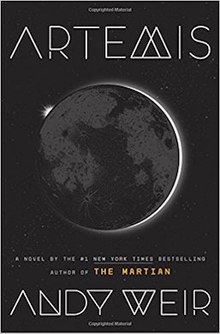
Artemis, by Andy Weir

RATING

N/A

N/A = good but not on the scale

1 star = perspective supplementing

2 stars = perspective influencing

3 stars = perspective altering

SHORT SUMMARY

This is the first fiction book I have reviewed.

I really enjoyed The Martian, probably one of my favorite books in recent memory. Artemis was entertaining, but I couldn’t pull many broad themes from it. Maybe everything doesn’t need to have a bigger theme, though, and when I keep that perspective in mind, the book was enjoyable. It tells the story of life on a Moon colony through the eyes of a blue collar worker wrapped in a get rich quick scheme. The main takeaway I had from this is how visions of a not so distant future still will have elements that make humans humans: power, corruption, economics, race, culture, religion, etc.

It was interesting to think that a future society on a moon colony will still have the hallmarks and deficiencies of life on earth.

Not quite The Martian, not really enough for a “star” on my scale, but I’m glad I read it for what it was.

Born A Crime: Stories From A South African Childhood, By Trevor Noah

RATING:

3 stars

0 stars = good but not on the scale

1 star = perspective supplementing

2 stars = perspective influencing

3 stars = perspective altering

SHORT SUMMARY:

I was surprised to give three stars to this book.  Not to indict Noah’s relevancy or importance.  Instead, I saw this biography as an opportunity to understand a life perspective told with an interesting voice.

But this book resonated deeply.  Trevor Noah speaks with a level of sincerity about his upbringing in South Africa–not to cast his story as a rags to riches rise, but rather to provide an honest window into a life raised post-Apartheid.  His story is an allegory, of the absurd racial constructs that make his legal race unclassifiable, to the confines and pleasures of life in South Africa, to the stories of childhood that are simultaneously universally relatable, culturally specific, and uniquely individual.  He tells his story in a way to ask both the big questions and small questions at the same time.

Lately, I have been thinking a lot of what stories my young daughter will have from her childhood—and how to make her experiences real and relevant for the world in front of her.  My lesson from this book:  there are joys, sorrows, wins and losses, in every life lived, and it’s the background culture and society that makes those stories interesting and expansive.  Take the lessons from your own life, and apply it to your personal philosophy, but understand that the narrative for your children is mostly out of your control.  Noah speaks poetically of his mother, whose life knew struggles different than his own, but who’s influence undoubtedly impacted his own quest to find himself.  Perhaps this is a three star because it echoes some stories told within my own family.

LONG SUMMARY

This isn’t going to be one of my traditional book summaries.  Instead of recaping the book start to finish, I’m going to jot down interesting points and areas that I want to further learn about.  The book is great though, a window into growing up just after Apartheid in South Africa.

-The “bloodless” revolution to end Apartheid was anything but bloodless.  Noah speculates that this is called a “bloodless” revolution because little white blood was shed.  Makes me rethink the narrative of the “nonviolent” movement in India, and the sectarian violence that resulted in millions killed and displaced.

-The tribal conflicts in South Africa, primarily between the Zulu and the Xhosa defined a lot of the violence.

-Afrikaans were white people of Dutch heritage that migrated to South African and later settled there.

-Noah opines on the nature of oppression during Apartheid.  An interesting analysis:  his view is that the British and Afrikaans followed various effective models of subjugation around the world (including in the United States).  A small group of white colonialists were able to keep a majority of the population under control by exploiting tribal divisions between them.  The British did this in India, and the race-based system of slavery did this in the United States.  While keeping people divided along tribal lines, a minority could keep remain in power.  Makes you wonder if about our politics.

-Under Apartheid, there were three different “races”–blacks, whites, and colored.  Colored included mixed race and people of Indian heritage.  This lead to some weird oddities.  Chinese people were considered black because there was not enough Chinese people to justify a new designation.  Japanese people, however, were similar in population but were treated as white because the South African government wanted to keep in good favor with Japan to purchase luxury cars and electronics (at least, according to Noah)

-Noah talks a lot about the power of language.  His mother’s ability to speak multiple tribal languages enabled her to connect with more people and to avoid more danger.  Similar for Noah.  His belief is that language provides a short circuit for acceptance into a group.  He mentions a story of being accosted by a group of men speaking Afrikaans, and when he was able to speak with them in their language, they went from wanting to mug him to playfully bantering with him.  Noah’s view is that this taps into a notion of “speak like us, even if you don’t look like us, and we will accept you.”

-Another comment that Noah made that was very interesting to think about.  Given that he was half-white, Noah was considered “colored” under Apartheid’s racial classification.  He talks about living in an area (or going to a school–I can’t remember), of a majority “colored” children, and how he was ostracized because of his non-colored interests, more so than when he was a colored kid amongst white kids interested in white culture or a colored kid amongst black friends interested in black African culture.  His point is this:  it’s easier to be an outsider trying to assimilate into a group than it is to be an insider trying to assimilate out of their group.  His view is that a white guy who is into black culture and who has a majority black friends is more able to assimilate and be accepted than if that same white guy was into black culture and had a majority white friends.

-One of the themes in Noah’s book is the power of language, the ability for language to transcend other boundaries.

-One funny anecdote was about how when Noah started DJing in “the hood” he had a friend named Hitler who would bring the party with his dance moves.  Noah goes into a discussion about names among people in the South African “hood” and how there are many people named Hitler, Mussolini, etc.  Not because people identified or agreed with their beliefs, but rather, because people didn’t have any reason to be educated about who these people were.  So folks just heard these names, and associated them with power.  That Hitler was fighting the British and was winning against people who the colonized people in South Africa saw as being all powerful.

-Noah ends his story with a poignant recount of his mother’s troubled relationship with her husband, Noah’s step father.  This person ultimately shoots Noah’s mother in the head, but she miraculously survives.  The way Noah describes his emotions, being raised in an abusive family, is honest and raw.

Everybody Lies: Big Data, New Data, and What the Internet Can Tell Us About Who We Really Are, By Seth Stephens-Davidowitz

RATING:

1 star

0 stars = good but not on the scale

1 star = perspective supplementing

2 stars = perspective influencing

3 stars = perspective altering

SHORT SUMMARY (272 words or less)

This book focuses on big data analysis.  How large data sets enable a more honest view into human trends.  The author theorizes four virtues of big data:  (1) size; (2) honesty; (3) unique segmentation opportunities; and (4) untapped data sources.  As a main example, the author’s theory is that people type into Google things they otherwise would not reveal in public, and the database size allows us to learn more revealing tendencies in population segments.

I think this is an important book.  The underlying theories are interesting, and big data analysis already impacts most aspects of our lives.  For example, A/B testing keeps you on that app or website just a little longer than you otherwise would stay.  It’s important to understand these assumptions.  

The book seems to follow two threads.  One is the specific trends that are observed from big data analysis.  You can read about them below, the most interesting to me was the doppelgänger analysis.  The second involves the virtues of big data analysis itself.  It’s here where I have some comments, not doubts, on the assumptions.  Can the analysis become self fulfilling?  After reading this, I see big data sets as a land rush that’s soon ending.  As data companies consolidate into larger data sets, is there room for other sets come into existence?  Or, are we starting from a limited number of sources to determine trends, theories, etc., and then perpetuating those prophecies.  In other words, if Google is a starting point, is there room for another Google-like data source, years down the line, to update the resulting conclusions?  Do we stop buying strawberry pop tarts?

LONG SUMMARY

Started on January 5, 2017:

-Over the Christmas holiday, some good friends recommended this book, so I put it next in my audible queue.

-About 2 hours through, I have some general thoughts.  Initially, the author talks about the motivation of this book.  It’s derived from his PhD work which involved using Google data to infer trends.  He goes into a discussion about fallacies related to the law of small numbers (referencing Daniel Kahneman similar criticism [I think] of the topic in his “Thinking, Fast and Slow” book).  I’m not really sure of the details here, but from what I gather, this book is going to be a defense of big data.

-Much of this book will be filled with correlation trends sourced from big data repositories like Google, etc.  So throughout this summary, there will probably be a lot of comments like “during X times, people tend to search for Y” or “people from X area tend to search for Y” or “people who exhibit X behavior tend to have Y characteristics”

-I think an initial disclaimer should be made though.  As I’m listening to this book, I kind of get the feeling that it should really be two different books.  The author seems to be chasing two different, but not mutually exclusive, themes.  The first is Gladwell-ian, showing how certain trends are related to certain determining factors (e.g., the NBA example below).  The second is a defense of big data itself.  Both are interesting, but it feels a little clunky how he bounces between those themes.

-The central theme of his book is that people tell Google (and other services) information that they wouldn’t admit in person (also known as “social desirability bias”), and thus, the data sets provided by these services reveal richer information about societies on a large scale.

-The first chapter goes into an interesting discussion about NBA players.  How a conventional myth is that NBA players, particularly African American players, are born and come up in tough inner city environments.  The author takes this assumption and runs it through large and/or extensive data sets to debunk that.  Most NBA players tend to come from middle income or affluent zip codes or counties, with two-parent and middle class family upbringing.  The point being that the story of LeBron is the exception, not the rule.

-The author also goes into a discussion of data analysis taken from pornographic website databases.  He finds some, um, interesting trends.

-His trends that he discovers regarding racist and hateful speech is just as disturbing, particularly his description of there being an uptick in racist joke searches after Obama’s election and on Martin Luther King Jr. Day.  If anything, the author is able to see into the hidden (or maybe not so hidden) underbelly of our society through this data anlysis.

-The author extolls the virtues of big data with four attributes:  (1) big data is, well, big, so it allows us to run large scale experiments that would otherwise be very time, labor and cost intensive, and allows us to glean correlations and causations from these experiments; (2) big data is honest–the point above, that people tell Google things they would never admit in public; (3) big data allows us to segment data in unique ways due to its size; and (4) big data provides new types of data that would otherwise be unavailable (e.g., author says to think about the pornographic database that Freud and other psychologists would have loved to access).

-All of this makes sense, except I have one piece of criticism.  Big data sources may be honest–in that the data is not false–but they may not necessarily be complete.  For example, I wonder how susceptible to skewing these derived trends are.  Are you more likely to type into Google “I hate my job” than you are “I love my job”?

-The author mentions how big data analysis may not always be about understanding why a trend is the way it is, but rather that a trend itself exists. Interesting examples of this from the book is horse racing. The traditional analysis to identify potentially successful racehorses involved looking at a horse’s genetic lineage. Author mentions that American Pharaoh, which went on to win the triple crown, was identified via data analysis. The analysis from a lot of previous racehorses indicated that left ventricle size was strongly correlated to a racehorses success. American Pharaoh at age 1 was in the middle percentiles for most physical attributes except for left ventricle size, for which it was in the 99th.

-Another interesting example. Walmart determined, based on an evaluation of all their sales data, that people tend to stock up of strawberry pop tarts before a hurricane. Not just any pop tarts, but specifically strawberry pop tarts. So now, before hurricanes hit, they send high quantities of strawberry pop tarts down I-95 toward Florida, and they sell fast. Walmart does not necessarily know why his happens, just that it does happen.

Which takes me to another thought. Is this a hidden danger in big data analysis? Taking the trivial strawberry pop tart example, is there a danger of further reinforcing a trend once we have identified that a trend exists? Walmart initially knows that these pop tarts sell out, based on presumably years of data. But then, because they know this, they double down and reinforce the data by targeting the supply as needed. On one hand, of course you’d want to make money once you identify a market demand. But the larger question to me- if you pick a point in time to do an analysis, and then look at the data backwards from that point in time to identify trends, and then move at large scales to address the trends, have you in essence frozen out the ability for the trend to change? It seems possible that big data can amplify and self-perpetuate; Walmart knows that people eat strawberry pop tarts before a hurricane, stocks their shelves, and then people buy more strawberry pop tarts because there are more available.

-The United States “is” vs The United States “are”. The book goes into a historical fascination of when in US history citizens started referring to the United States as a singular country (saying, for example, the United States “is”) vs a confederation of states (the United States “are”). Conventional historical theory says that this verb shift happened right after the Civil War. The author points out that Google Ngram- which is capable of word analysis through the digitization of text- indicates that plural verbs were still being used in dominance, 15 years after he Civil War. So maybe the shift in the public perception of the US as one country rather than a federation happened much later.

By the way, I just played around with Google Ngrams, pretty cool feature.

-This book is filled with cool little facts. One analysis of Facebook data showed differences between men and women’s language. The sterotypical ones, men are more likely to talk about football and Xbox, women more likely to talk about shopping and hair. Also this data indicates that men curse more than women. Another interesting analysis on age breakdown. The author calls it “Drink-Work-Pray”. Younger people post about partying, middle age about work, older about prayer/spirituality.

-Sentiment analysis: determining the mood of a particular text.

-Sentiment analysis described in the book indicates that there a large percentage of stories fits into one of six structures :

1. Rags to riches- rise

2. Riches to rags – fall

3. Man in a hole – fall then rise

4. Icarus – rise then fall

5. Cinderella – rise then fall then rise

6. Oedipus- fall then rise then fall

-Author makes an interesting point about how social networks actually expose you to more diverse viewpoints. This is counter to traditional notion of social network echo chambers. The authors argument involves a survey of data that projects your political compatibility relative to people in your life. For example, the likelihood that you and a coworker, for example, will have differing political views. The survey data indicates that as you get closer and closer to real life connections, the likelihood of disagreement is lower than your online connections (or random online pairing). The theory is that your online social connections are weak social links, and this you are less likely to self select them out because you wouldn’t really hang out with them in person anyway. An interesting take for sure, I’ll have to think about that.

-Good point about how truth serum data like google can help the most vulnerable populations that don’t admit or problems publicly or underreport them. For example, child abuse victims, women seeking off the grid abortions, etc.

-While google may be a truth serum data source, Facebook and other social media may be the opposite. On social media, people have the incentive not to necessarily tell the whole truth. I think the same could be said about the truth serum data sources too though. Interesting idea though, of Digital truths vs digital lies

-One analysis indicated that political views tend to  be formed from the ages of 14-24. People’s political views don’t grow more conservative as time goes on, but rather, they are affected based on their perceptions during their formative years.  People who were 14-24 during a popular Eisenhower remained more conservative throughout their lives, as were those who were that age during the Kennedy and early LBJ years.  People who were 14-24 during unpopular presidencies like Nixon showed those predispositions later in life too.

-Sports allegiances for boys from 9-19, for girls (women) at the age of 22.

-The author does a county by county analysis of “famous” baby boomers (those baby boomers who have Wikipedia entries that are not for bad acts). His goal is to try and project out exactly which areas are more conducive to success-as defined by appearing in Wikipedia. His findings are that cities over suburbs produce more famous/successful people, as do college towns, and areas with super specializing (eg due to a specific industry within a city or county). It’s an interesting analysis. Though I do question the assumptions. In general, this is my fundamental view of the book, the analysis reveals very interesting trends, but also simultaneously, it’s incredibly reliant on the data sources or combinations of data sources to feed the base assumption. Not saying I disagree, food for thought though. What if there was analysis on what the ideal data source(s) should look like, and do we have those already in existence?

-More people search broad philosophical questions on google between 2am and 4am, which to me is interestingly as it relates to the Hindu concept of “brahmamuhurtha”

-Doppelganger research – The author provides a discussion of doppelganger research in baseball player analysis.  The story involved David Ortiz, how his performance dipped in the 2009 season and how according to conventional wisdom, he should have been let go or traded.  But Nate Silver (I believe) did a doppelganger analysis on David Ortiz by basically taking a record of every major league player and as many stats available for each player, and then finding the closest player that mirrored Big Papi’s performance int he ’09 season.  The results indicate that he had not hit his peak, and when the Red Sox kept him (not sure if they kept him for this analysis or not, I kind of zoned out), it proved to be true.  Ortiz ended up becoming a multi-year all star after his ’09 season and being named 2013 World Series MVP after the Red Sox won.

The author’s larger point is that doppelganger research can be incredibly valuable.  Amazon uses it for book recommendations–they find someone who is not exactly like you, but almost exactly like you, and provides you with book recommendations.  Netflix does the same thing with movie recommendations.  The author mentions that it’s astonishing how under utilized this data analysis technique is.

-A/B testing.  The author discusses the power of A/B testing and it’s prevalence for internet communities, websites, networks and products.  A/B testing basically involves selecting two population groups and showing one group an “A” version of a web feature and another group a “B” version of a different feature (for example, font colors, text, etc.).  The power of A/B testing is that hypothesis about what keeps consumers attention can be tested and iterate very quickly relative to the non-internet world.  The author make a good point about the potential dangers–does this ability inevitably lead internet sites to unlock the attention draws of the human mind to create addictive behavior.  By honing in over and over on UX that draws in users, the argument could be made.

Year in Review – 2017

Previous years

2016 books

COMPLETED (Short summaries below)

Martin Van Buren” by Ted Widmer

rating:  N/A

“Shoe Dog” by Phil Knight

rating:  1 star

“The Immortal Life of Henrietta Lacks” by Rebecca Skloot

rating:  2 stars

“Thinking, Fast And Slow” by Daniel Kahneman

rating:  N/A

“What The Dog Saw” by Malcom Gladwell

rating:  1 star

“William Henry Harrison” by Gail Collins

rating:  N/A

“What Happened” by Hillary Rodham Clinton

rating:  1 star

“Subliminal:  How Your Unconscious Mind Rules Your Behavior” by Leonard Mlodinow

rating:  2 stars

“Astrophysics For People In A Hurry” by Neil deGrasse Tyson

rating:  3 stars

“The Sports Gene” by David Epstein

rating:  1 star

NEXT YEAR GOAL

My reading goals for 2018:  read 24 books and read more fiction.

IN PROGRESS

“American Nations:  A History Of The Eleven Rival Regional Cultures Of North America” by Colin Woodard

“Algorithms To Live By:  The Computer Science Of Human Decisions” by Brian Christian and Tom Griffiths

“John Tyler” by Gary May

SHORT SUMMARIES

Martin Van Buren – By Ted Widmer

MVB

RATING: N/A

SHORT SUMMARY (272 words or less):

There’s a reason why Van Buren is mostly forgotten.  As President, he did not establish any lasting or transformative doctrine.  Nevertheless, he did leave a meaningful legacy in his life’s first and third acts, especially on party politics.

MVB grew up poor, the son of a tavernkeeper in NY.  He was a self-educated lawyer and political star before becoming a Senator, Governor, Jackson’s Secretary of State and VP.  In his pre-Presidency, through political compromise he recalibrated the Democratic Party away from the Jeffersonian view of leadership by educated elites towards a Jacksonian view of populism unified across a North-South geographic alliance.  MVB’s Presidency, however, was doomed to fail primarily because he took office during the Panic of 1837, an economic calamity driven by loose credit, speculation and heavily leveraged trade with Great Britain.  His ineffective Presidency unified the Whig opposition party and fractured Jacksonian Democrats, primarily along divides of geography, expansionism and slavery.  Like Jackson, MVB supported the institution of slavery.

MVB was defeated in 1840 and attempted a comeback in 1844.  As he campaigned, MVB traveled and accidentally met a young Abraham Lincoln.  His once rigid stance on slavery softened.  He did not win the Democratic nomination, but was nominated by the upstart Free Soil Party, an anti-slavery group splintered from the Democrats.  This party played spoiler in the 1844 election, handing it to the Whigs.  Ultimately the party was subsumed by and gave legitimacy to the platform of Lincoln’s Republican Party.

But, do you want to know the best part of MVB’s legacy?  OK.  Literally, the word “OK.”  MVB’s use of this phrase made it part of the mainstream lexicon.

Shoe Dog – By Phil Knight

shoe-dog

RATING:  1 star

SHORT SUMMARY (272 words or less):

This book was interesting, especially given my profession.  I did appreciate Knight’s honesty throughout the book, of the trials by fire that he went through to learn the business.  That is not very uncommon, I know, but it was interesting to read about.  There weren’t any profound life philosophies that I gleaned from reading the book, but there were a few themes that emerged for me.

One:  throughout his early career, Knight often referred back to his travel around the world when he was in his early 20s.  Sometimes the macro-insights made its way into his business thinking, but often it was lurking in the background, a calibration of his world view that made him think or respond in certain ways.  I have often said how I believe that every action you take, big and small, meaningful and meaningless. is the culmination of an entire life’s experience.  I feel like Knight was honest about the background philosophies and life experiences that shaped and informed who he was as a person outside of a businessman.

Two:  Everything in business comes down to supply and demand.  High demand without supply to meet it; high supply without demand to meet it; etc.  Seems so basic, but it’s so fundamental.

Three:  Inspiration can come at a moment’s notice.  E.g., the name “Nike” was selected almost whimsically.  Inspiration can also be a methodical grind.  It took Knights company years to become an overnight success.

All in all, this is a good book.  Worth reading, if anything to learn about an interesting journey for the start a development of a successful business.

The Immortal Life of Henrietta Lacks – By Rebecca Skloot

henrietta-lacks

RATING:  2 stars

SHORT SUMMARY (272 words or less):

What a fantastic book.  It toes the line between incredulity and fate, as Henrietta’s story seems both from another world and also destined to influence human progress.

Henrietta Lacks is the namesake of the”HeLa” cells prolific in medical research.  HeLa cells derive from cervical cancer cells taken from Lacks in 1951.  Incredibly, HeLa cells reproduced a new generation every 24 hours and were the first immortal human cell line to sustain generational growth in lab settings.  And they are still growing today.  HeLa cells have lead to breakthroughs in biomedical technology, advancing treatments for polio, HIV, HPV, leukemia, influenza, hemophilia,  Parkinson’s, IVF, cancer, etc.

Henrietta was a young, black tobacco farmer in Baltimore who was treated for cancer at Johns Hopkins.  She was treated as well as possible for the time, but her cells were taken without her or her family’s consent (not uncommon at the time).  HeLa cells became, and still are, widely disseminated throughout labs around the world, and ultimately, biotech industries profited heavily from their distribution.

The author discusses race, economics and our institutions objectively in context of Henrietta’s story.  In a heartbreaking quote, with a complicated question, posed by Henrietta’s son:  “If our mother is so important to science, how come we can’t get health insurance?”  It makes you think about all sides of what that means.

But, here is the mind boggling theme.  Cells from a woman who died tragically young from cancer continue to change the world 66+ years after her death. If there’s ever a cure for cancer, the fact that Henrietta lived on this earth will have a lot to do with it.

Thinking, Fast and Slow – By Daniel Kahneman

avjn-square-1536

RATING:  N/A

SHORT SUMMARY (272 words or less):

The book received high praise (author is a Nobel Prize winner in economics) as a detailed analysis of the duality of human thought and how it affects perception, decision making and conclusive analysis.  I am sure the praise was warranted, but I just couldn’t get into it.  Maybe it should be a night stand book for me to pick up every now and then.  I may try again later, but after dedicating five hours of listening with fifteen more to go I’d rather move on.  But here are my takeaways.

The basic theme:  our process of thinking is governed together by a “fast thinking” system and a “slow thinking” system.  The fast thinking system primes responses for the slow/deliberate thinking system.  In one example, people primed with pictures of food are more likely to fill in the phrase “s–p” as “soup” than those primed with pictures of uncleanliness, who supply the word “soap.”  The slow thinking system provides the response, but it’s primed by the fast thinking system.

Thus, overall perception of the world can certainly be influenced by the subconscious perception by the fast thinking system.  It reminds me of a documentary on the movie “The Shining” called “Room 237” where there is a discussion on subliminal messages in the advertising industry.

I also learned about the Lady MacBeth Effect.  A demonstrative example:  people who are asked to lie verbally then will later prefer oral cleaning products, while those who lie on email select hand washing products.  Something about how Lady MacBeth imagined blood stains on her hands after committing murder.

What the Dog Saw – By Malcom Gladwell

What the dog saw

RATING:  1 star

SHORT SUMMARY (272 words or less):

No short summary

William Henry Harrison – Gail Collins

whh

RATING:  N/A

SHORT SUMMARY (272 words or less):

What did you do over the last month?  Whatever it was, it’s more than what William Henry Harrison did during his 31 days as President.  In fact, the ultimate irony of this summary is that it took me six months to read a biography of a President who served for only one.

It’s an unfortunate fate, to be remembered as the most inconsequential US President.  But that’s the hand that Harrison was dealt.  His biggest Presidential accomplishment was that he was the first to die in office.  His funeral set some unfortunate future traditions, the most evocative and eerie being the riderless horse that echoed across time, 122 years later for President Kennedy.

Harrison’s life, though, did have an impact on American history, in the same magnitude as many non-Presidents whose biographies often go unexamined:  Burr, Mason, Gerry, Hamilton, Clay, Calhoun, etc.  So, it was interesting enough to read about Old Tippacanoe.  But make no mistake, I’m in the midst of a boring stretch.

Harrison’s main contribution came in two ways:  defeating of the powerful Shawnee Chief Tecumseh; and much later in life, his first-of-a-kind folksy campaign for President in 1840.  The impact of Tecumseh’s defeat cannot be overstated.  It crushed any hope for the formation of a Native Federation to counterbalance and counterattack American expansion.  The impact of Harrison’s 1840 Log Cabin Campaign cannot be over-exaggerated.  It set the tone for a litany of Presidential candidates’ narratives of the “common man” and running against an ambiguous Washington elite.

Also, the word “booze” became mainstream after the 1840 campaign.  Perfect, because booze is what you’ll need to get through this summary.

What Happened – By Hillary Rodham Clinton

download

RATING:  1 star

SHORT SUMMARY (272 words or less):

I started out reading this book with the expectation to summarize it like the others. And though the book was interesting, to me, from a historical perspective, I felt exhausted to try to write about it. Probably because of the recency of the election, even putting my politics aside.

So here are my big takeaways.

One, history will look at this election as a very bizarre one.  The monumental upset and the historical candidacies, not just gender but age and tradition, would be enough to make it something history will dissect for a generation. Add the very basic intrigue of the loser having to attend, on stage, the election of the winner. What a bizarre time.

Two, regardless of your politics, it really is amazing that Hilary Clinton never was elected to the office. If you were with her, you look to the many things that coalesced to provide the upset, and it seems unreal. And even if you were not with her you come to the same conclusion with your political views in stride, that it was a big surprise to see Trump win the election.

Three, Clinton won 3M more votes than Trump. That’s a big number. The question that remains: is Clinton’s loss a repudiation of the Democratic Party platform? Or does the focus need to be on the 80,000 that swayed the election? In other words, does the Democratic Party pivot towards economic populism only and move away from equal rights issues, or can they be competitive doing both moving forward?

Subliminal – By Leonard Mlodinow

Subliminal

RATING:  2 stars

SHORT SUMMARY (272 words or less):

My biggest takeaway from this book:  the existence of a subconscious mind is not theory, it is a proven fact.  And so is its influence on conscious thinking.

There’s this concept in Hinduism of the “lotus dream”–that our world isn’t really the true world, that it’s the result of a divine dream on a cosmic time scale.  This book doesn’t get into that at all, but it does discuss the idea that our conscious understanding of the world is a mere model, processed by inputs in our conscious mind and broad influences observed by our subconscious.  In a mind blowing example, our brain gets hit with the equivalent of 11 million bits of information every second, and our conscious mind processes only 16 to 50 bits of that.  The rest is filtered, categorized, and discarded by our subconscious.

There are a few areas that I want to explore further.  One:  the actual neuroscience and biology of the human brain.  Which regions do what?  How do they interact?  Two:  the impact of categorization.  How does the subconscious automatically categorizes sensory information and how is our conscious mind subsequently influenced?  Three:  the remnant artifact of the subconscious mind.  Forgotten experiences do not always disappear; they remain in your cognition long after you forget them.  Book example:  lullabies sung to babies.  You don’t remember them when you grow older, but the emotional impact remains in your subconscious long after your conscious mind forgets the melody.  And four:  the evolutionary conditions that lead to the biological change in human cognition.  Specifically, what happened 50,000 years ago when our brain chemistry changed so suddenly?

Astrophysics for People in a Hurry – By Neil deGrasse Tyson

download

RATING:  3 stars

SHORT SUMMARY (272 words or less):

Initially I was not going to write a summary for this book.  But the last chapter really spoke to me.  It articulates Tyson’s view of the “Cosmic Perspective” – a sweeping philosophical discussion that marries the concepts of science and existential philosophy through the lens of astrophysics.  I cannot speak for him, but from what I can take of this view is that the fundamental question of astrophysics is to understand how the universe works, and this inquiry is based in both science and imagination.  The science allows the perspective to stay grounded and to follow verifiable truths.  The imagination allows us to think way outside the bounds of what we know and observe, to postulate theory and propose fantastic alternatives to what we perceive to be real and unreal, almost spiritually.  It’s an interesting take, to introspect in this way.  It feels like the next evolution to Carl Sagan’s “Pale Blue Dot.”

As for a summary, this book is densely packed with information, but highly entertaining.  It’s the kind of book that I’ll go to again.  I had some random takeaways.  Through a quirk of quantum physics, matter barely outnumbers anti-matter, and this allows for all of our existence.  There is growing evidence of our existence being part of a multiverse.  Life in our solar system may have originated on Mars.  The moons of Uranus are the only ones named after characters from British literature not Greek mythology.  Einstein was such a badass that his self-proclaimed “biggest blunder” (the cosmic constant) wasn’t actually a blunder at all.  He just didn’t know that the universe was expanding, but his math still works.

The Sports Gene – by David Epstein

the sports gene

RATING:  1 star

SHORT SUMMARY (272 words or less):

This is book is a rebuttal of the Gladwell 10,000 hour rule.  I commend the author for being bold, looking at issues of race, geography, and genetics, in an area of where this kind of research seems taboo.  It would be trite, but not inaccurate, to say that Epstein’s argument boils down to a nature and nurture explanation of elite athleticism.  But it explains those arguments in captivating ways.  Genes matter, it’s not just about deliberate practice or hitting 10,000 hours.  But culture matters too.  If you go to Jamaica or Kenya, you’re not immediately going to find a Olympian sprinter or marathoner, but you will find people who will biologically respond better to intense and elite training.

Highlights:  elite athletes “chunk” and develop neural pathways to overperform.  A fastball reaches the plate quicker than human reaction time allows a swing, so a slugger subconsciously determines when to swing based on a pitcher’s shoulder positioning upon release.  Natural selection and sexual selection manifests to physical traits. Humans are similar to primates and so the male genetic difference in size and strength is related to the gestation period of women.  Genghis Khan as a lot of descendants, around 16M Asian men have an identically shared Y chromosome.  Jamaicans may be the best sprinters in the world because people with recent West African ancestry may have more fast twitch muscle fibers due to the evolutionary response to protect against malaria.  Kenyans are the best marathoners in the world due to their relative longer and thinner legs, and their running culture, infrastructure, and implicit/explicit social influences that encourage and necessitate running.

Information about sleep

Last year, I attended a talk about “sleep” by a world renown sleep expert.  I thought the subject was fascinating, especially as I was approaching the sleepless life of being a new parent.

Below for summary.

-Rhythms:  Infradian (more than one day), circadian (daily), ultradian (within a rhythm).  Sleep sessions are circadian; sleep cycles (REM/NREM) are Ultradian
-Sleep monitoring consists of measurements of EEG (brain waves), EOG (eye movements) and EMB (muscle tension)
-non-REM (NREM) characteristics:  low frequency, high amplitude waves 

-REM characteristics:  high frequency, low amplitude waves; wakeful EEG patterns, low EMG patterns
-Sleep states are defined by combination fo EEG, EOG, EMG in 30 second epochs
-Over the course of a normal sleep night: early portion of the night, deeper NREM, shorter REM; later portion of the night, shorter NREM, longer REM
-Why you can’t remember dreams:  if you wake up during NREM, you won’t remember
-Takes 4 mins to develop memory—wake events shorter than 4 minutes may not leave memory impact
-Children have longer deep sleep states, lessens as you get older
-“Sleep like a baby” = deep NREM, more REM cycles, less awake events, sleep longer (as you age, all these go down)
-Why we sleep:  homeostatic sleep drive + circadian sleep drive.
-homeostatic = length of sustained wakefulness; circadian = set by light and environmental factors
-early portion of night, we pay off sleep debt, and circadian drive keeps sleep going.  Circadian drive = more REM
-jet lag = hard to sustain full sleep b/c circadian rhythm doesn’t keep sleep going, so you’re just paying off sleep debt
-You can’t pay off sleep debt in one night; you pay off some sleep debt each night; circadian sleep won’t let you pay it off all at once
-takes about 4-5 days of one night of bad sleep
-progressive deterioration = consecutive nights of bad sleep accumulates.  One night of bad sleep doesn’t affect next day, but may affect days after; likewise, optimal performance is about multiple nights of sleep, not just night before
-sleep latency (amount of time it takes you to fall asleep) is generally proportional to your sleep debt.  Quicker you fall asleep the more sleep debt you have
-screens:  light info detected by retna goes to hypothalamic nucleus, which set circadian rhythm.  So certain light triggers can mess with circadian rhythm 
-west bound travel easier b/c light exposure prolongs circadian rhythm
-normal human circadian clock is around 25.3 hours (~25-26 hours). Environmental factors keep us at 24 hours (exposure to sunlight, temperature, etc.).
-Arousal/Environmental factors impact and contribute to sleep disruption

The Sports Gene, by David Epstein

RATING

1 star

0 stars = good but not on the scale

1 star = perspective supplementing

2 stars = perspective influencing

3 stars = perspective altering

SHORT SUMMARY (272 words or less)

This is book is somewhat of a rebuttal of the Gladwell 10,000 rule.  I commend the author for being bold, looking at issues of race, geography, and genetics, in an area of where this kind of research seems taboo.  It would be trite, but not inaccurate, to say that Epstein’s argument boils down to a nature and nurture explanation of elite athleticism.  But it explains those arguments in captivating ways.  Genes matter, it’s not just about deliberate practice or hitting 10,000 hours.  But culture matters too.  If you go to Jamaica or Kenya, you’re not immediately going to find a Olympian sprinter or marathoner, but you will find people who will biologically respond better to intense and elite training.  

Highlights:  elite athletes “chunk” and develop neural pathways to overperform.  A fastball reaches the plate quicker than human reaction time allows a swing, so a slugger subconsciously determines when to swing based on a pitcher’s shoulder positioning upon release.  Natural selection and sexual selection manifests to physical traits. Humans are similar to primates and so the male genetic difference in size and strength is related to the gestation period of women.  Genghis Khan as a lot of descendants, around 16M Asian men have an identically shared Y chromosome.  Jamaicans may be the best sprinters in the world because people with recent West African ancestry may have more fast twitch muscle fibers due to the evolutionary response to protect against malaria.  Kenyans are the best marathoners in the world due to their relative longer and thinner legs, and their running culture, infrastructure, and implicit/explicit social influences that encourage and necessitate running.

LONG SUMMARY

This is a re-read from a couple of years ago.  I was thinking about this book the other day and decided to give it a second go around.  I may also do that with the Stuart Scott biography I listened to a few years ago as well.

-This book is kind of the antithesis of the Malcom Gladwell 10,000 hour rule.  While in Outlier, Gladwell postulates that 10,000 of hours of deliberate practice in a particular discipline is enough to gain above average proficiency, this book seems predicated on the thesis that some people may be born or gifted with traits that accelerate their path to elite status.  One of the interesting facts is that when analyzing practice time for elite athletes, the range of hours is very broad.

-Book starts with a story of a world class softball player who is able to strike out all the heavy hitting major leaguers.  The reason, major league sluggers don’t just keep their eye on the ball and swing.  The ball comes in too fast for the 200 millisecond reaction time of humans.  Rather, hitters chunk their information, mainly by relying on ingrained cues, primarily the shoulder position of the pitcher when the ball is thrown.  This idea is discussed also in the context of world class chess players.  They innately “chunk” the chess board, and the possible moves, instead of analyzing everything individually.

-Why Michael Jordan couldn’t hit. Book goes into a discussion of how the brain “prunes” neural pathways after a certain age. The tradition thought was that neurons grow as people age. Now the science says that neurons don’t grow but rather the neural connections enforced at a young age get stronger as you age and the unused connections are pruned away. Thus, even though Michael Jordan had phenomenal athleticism, his neural pathways to hit baseballs were probably pruned while he was busy playing basketball.

-Why men have nipples. We all begin life as females. For the first six weeks, all embryos are female. Then, for males, a gene called the SRY gene (the “sex-determining region Y” gene) turns on and initiated the production of testes and leydig cells and testosterone, which precipitates the development of the male body.

-Natural selection and sexual selection. The author goes into an interesting discussion here. He starts off with articulating something call the “throwing gap” where, at a young age, boys and girls diverge in their ability to throw a ball. The author uses this as a platform to discuss the genetic differences between male and female (and how some female athletes test as “XY” male even though they appear and present as women).

The idea of sexual selection goes like this: the gender of the species that can reproduce more frequently ultimately develops, through natural selections, characteristics that enable such fast reproduction. For some gorillas primates, the female gestation and weening period is four years long, and thus in order for the male to reproduce frequently, he will keep a haram of female gorillas. To compete with other males, he will use strength and violence, or at the very least will develop physical attributes that resemble strength. Thus, males will compete and kill each other to maintain their ability to reproduce quickly (ie with multiple females), and such sexual selection will promote the traits most suitable to do so.

In other animals, these traits manifest differently. For example, birds must rely on developing physical traits of appearance and attraction, not so much strength, and thus you see the colors and calls like the birds of paradise. For seahorses, females can reproduce more quickly than males, and so females have sexually selected to be the stronger gender.

Humans are similar to primates and so the male genetic difference in size and strength is related to the gestation period of women, and the resulting natural selection that results.

-One way to trace human lineage is through the Y chromosome for men and mitochondrial DNA on the X chromosome for women. Something like 16M Asian men (or 0.5% of the worlds male population) have an identical shared Y chromosome. The theory goes that this indicates decendency from Gengis Khan who famously had hundreds of mates.

-Muscle types breakdown into two groups: fast twitch and slow twitch. Fast twitch fibers contract twice as quickly, useful for explosive activities like sprinting, but tire quickly. Slow twitch take longer to contract but tire less frequently, useful for long stamina activities like distance running.

Not surprisingly, athletes in sports of varying explosiveness have different proportions of fast to slow twitch muscle fibers. Begs the question, is this due to training or genetics. The answer is genetics. Author says that there is no scientific study that shows an ability for training to convert from one muscle type to another.

-Height vs. wing span.  Most people have a wing span to height ratio of 1:1.  The average NBA player has a ratio of 1.06, which is unusually high.  A high wing span relative to height show how “tall” a person is for their given height.  If your wingspan is bigger than your height, you’re better able to block shots.  In fact, author points to some analysis that showed people at a certain height with a longer wingspan blocked more shots than people without.

-Yao Ming’s parents were brought together by Chinese basketball officials because of their height.

-Malaria and fast twitch muscles:  this was probably the most fascinating part of the book for me.  It starts off with a discussion of the distinction between fast twitch and slow twitch muscle fibers.  Fast twitch are generally anaerobic and are utilized for explosive activities.  Slow twitch are more aerobic consuming and are used for endurance activities.  While you can grow your muscles by working out and exercising, most humans cannot change the proportion of fast twitch to slow twitch muscle fibers.  You’re kind of born with a preset ratio of fast twitch to slow twitch.

So why are some people born with a greater proportion of fast twitch to slow twitch muscle fibers?  Specifically, the author investigates theories as to why Jamaican runners have dominated the fast running distances at the Olympics.  The author explores a theory by individuals named Morrison and Patrick Cooper a larger question, of why people with recent ancestry from West Africa have dominated the men’s and women’s 100M for the last 20 years, and why almost every cornerback in the NFL is from West African descent.

The theory goes like this.  Malaria in West Africa forced genes to proliferate in order to cope with malaria, and those genes in turn, which reduce an ability for a person to aerobically make energy, lead to shift in development of fast twitch muscle fibers, which are less dependent on oxygen for energy production.

In detail–the idea goes like this.  In some areas where malaria is prevalent,  people living in those areas can sometimes have their red blood cells “sickle” to protect against the maladies of malaria.  It’s a biological and evolutionary tradeoff–by sickling, the red cells protect against malaria, but the other side to that coin is that it causes those people to become very inefficient (and possibly downright ineffective) at dealing with aerobic activity.  So over time, the body develops muscles that do not rely heavily on oxygen for energy production, i.e., fast twitch muscles.

So the conclusion could be that those with West African descent may be programmed with a larger proportion of fast twitch muscle fibers to slow twitch muscle fibers, and thus, they are more apt to perform better in highly explosive athletic activities.  Things like short distance running (100 meters, for example) or being the speediest person on a football field for short periods of time (e.g., a cornerback).

It’s an interesting theory, and some may say that it is one that kind of touches the third rail of genetic investigation–the effect of “race” on evaluating athletic performance.  I look at it more as the effect of geography, climate, and ecological conditions on genetic development rather than the effect of “race.”

-East African domination of distance running.  The idea here is that a particular tribe of Kenyans, the Kalenjin tribe, produces a significant number of elite distance athletes.  It’s not to say that all Kalenjin runners will be elite, but rather that they have the most potential to respond to intense distance running training.

17 American men have run a sub 2:10 marathon ever.  32 Kalenjin men did it just in October 2011.

Interesting side note–for distance running, the fastest Jamaican 10k or longer distance would likely not qualify for an Olympics, and the fastest 100 meters from the Kalenjin would also not likely qualify.  It’s crazy, they both are running events, but completely different sports.

So, why are the Kalenjin so good at distance running, relative to other people?  Well, before diving into that question, the author wisely emphasizes that the system and network of distance time trials with the Kalenjin lend it possible that more elite distance runners will be detected.  In other words, the system is there to find more distance runners, so it’s hard to tell what would happen if a similar system existed among other African (or other) groups.

Research from a Copenhagen institute tried to answer the question why the Kalenjin were so good.  In doing so, they measured both elite runners and also average runners.  What they found was that the Kalenjin did not differ significantly from Danish men in the proportion of fast twitch to slow twitch muscle fibers, on the elite level or the average level.  Same with VO2 max, pretty much the same between Kalenjin and Danish men and boys.  One difference, though, was in body type.  The Kalenjin have longer limbs than their Danish counterparts, even though the average Dane was taller than the average Kalenjin.  The most unique finding, though was not just how long the legs were relative to each other, but how wide (or skinny) they are relative to one another.  The Kalenjin have 15-17% less thickness when compared to Danish.  Skinnier ankles means that a person can move weight more efficiently.  The farther down the leg a weight (“distal weight”) is distributed, the more energy expenditure.  Adding one-tenth of one pound of weight at an ankle increases oxygen consumption by 1%.

This leads to humans with skinnier ankles having a better “running economy” (which is the measure of how much oxygen a person consumes at a given pace).  So, proportionally long legs and skinnier legs lead to better running economy.  In other words, The Kalenjin can go faster for the same oxygen consumption because of this.

Author makes an interesting point.  You are statistically likely to predict the winner of a distance race based on the ankle width alone.

The Kalejin originally migrated from modern day southern Sudan/South Sudan, where people have a similar physical build.  So why are there not many elite distance runners from southern Sudan?  This may be where culture comes into play.  One theory that the author states is that southern and South Sudan are geopolitically unstable, which may have curtailed the development of athletes and/or lead to discrimination and selecting out of southern Sudanese athletes all together.  Thus, there is a relative lack of sports running culture and development in southern Sudan when compared to in Kenya.  Classic nature and nurture argument.  The author talks about the “Lost Boys” from Sudan who moved to the US and then subsequently had high accolades in US track and field.

So it’s not all genetic, according to this theory, nor is it all scientific, the influence of the world around particular regions influences the development of these athletes.

Astrophysics for People in a Hurry, By Neil deGrasse Tyson

RATING

3 stars

N/A = good but not on the scale

1 star = perspective supplementing

2 stars = perspective influencing

3 stars = perspective altering

SHORT SUMMARY (272 words or less):

Initially I was not going to write a summary for this book.  But the last chapter really spoke to me.  It articulates Tyson’s view of the “Cosmic Perspective” – a sweeping philosophical discussion that marries the concepts of science and existential philosophy through the lens of astrophysics.  I cannot speak for him, but from what I can take of this view is that the fundamental question of astrophysics is to understand how the universe works, and this inquiry is based in both science and imagination.  The science allows the perspective to stay grounded and to follow verifiable truths.  The imagination allows us to think way outside the bounds of what we know and observe, to postulate theory and propose fantastic alternatives to what we perceive to be real and unreal, almost spiritually.  It’s an interesting take, to introspect in this way.  It feels like the next evolution to Carl Sagan’s “Pale Blue Dot.”

As for a summary, this book is densely packed with information, but highly entertaining.  It’s the kind of book that I’ll go to again.  I had some random takeaways.  Through a quirk of quantum physics, matter barely outnumbers anti-matter, and this allows for all of our existence.  There is growing evidence of our existence being part of a multiverse.  Life in our solar system may have originated on Mars.  The moons of Uranus are the only ones named after characters from British literature not Greek mythology.  Einstein was such a badass that his self-proclaimed “biggest blunder” (the cosmic constant) wasn’t actually a blunder at all.  He just didn’t know that the universe was expanding, but his math still works.