Year in Review – 2019

Previous Years

2018 books

2017 books

2016 books

COMPLETED (short summaries below)

“Becoming” by Michelle Obama

rating:  3 stars

“The Jungle and the Debate Over Federal Meat Inspection” – a case study from the book “Democracy” by David Moss

rating:  N/A

“Zucked” by Robert McNamee

rating:  2 stars

“Bad Blood” by John Carreyrou

rating:  1 star

“1493:  Uncovering the New World Columbus Created” by Charles Mann

rating:  1 star

“Possible Minds:  25 Way of Looking at AI” – a collection of essays curated by John Brockman

rating:  2 stars

“Super Pumped:  The Battle for Uber” by Mike Issac

rating:  1 star

Overview and next year goal

Like last year, I read six books again this year.  Unlike last year, this year’s books weren’t filled with 3 star ratings, but that’s ok, because the books I read were still enjoyable.  I guess thematically, I read a fair amount about Silicon Valley technology and companies.  Maybe this was subconsciously related to my move to the Bay Area?

Since I started keeping track here in 2016, I’ve read 29 books/publications, broken down as follows:

-Eight “3 stars” (Becoming , Origin Story, The Radical King, Letter From Birmingham Jail, Born A Crime, Astrophysics For People In A Hurry, Sapiens, American Lion)

-Five “2 stars” (Possible Minds, Zucked, Subliminal, The Immortal Life of Henrietta Lacks, Midnight’s Fury)

– Eleven “1 stars” (Super Pumped, Bad Blood, 1493, The Jungle and the Debate Over Federal Meat Inspection, Everybody Lies, The Sports Gene, What Happened, What The Dog Saw, Shoe Dog, The Wright Brothers, The Gene)

-Five “N/A stars” (John Tyler, Artemis, William Henry Harrison, Thinking Fast And Slow, Martin Van Buren)

Here’s to a good 2020!

IN PROGRESS

“Polk:  The Man Who Transformed the Presidency and America” By Walter R. Borneman (still)

“The Adventure of Huckleberry Finn” by Mark Twain

“Narrative Economics:  How Stories Go Viral and Drive Major Economic Events” by Robert Shiller

“How to Change Your Mind” By Michael Pollan

SHORT SUMMARIES

Becoming – By Michelle Obama
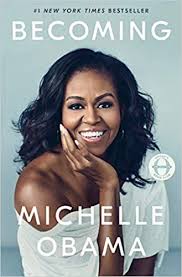
becoming

Rating:  3 stars

SHORT SUMMARY (272 words or less):

I’ve been on a streak of three star books, and this one is no exception.  Instead of summarizing the book, I’ll summarize my takeaways.

Michelle Obama provides an honest and deeply reflective view of her journey, how she became who she is, and how she is still becoming who she hopes to be.  In these extraordinary times, it’s an important and inspiring memoir to read.  Not just for the grandeur symbolism of American optimism (rising from the south side of Chicago to the White House), but also for its relatability in the successes, set backs, fun, sorrow, and just plain living, that Obama recounts in her life.  It’s refreshing to hear her life story told with such authenticity and groundedness.

One of the themes in this book that I enjoyed was the idea of “swerving.”  How your life plan may take you one way or another, and sometimes that can largely be influenced by upbringing or personal philosophies, but every now and then, you can take a swerve.  It could be deliberate, it could be accidental.  Obama describes this concept early and often in her book:  a college boyfriend who “swerved” from his medical school path to pursue becoming a pro-football mascot; her brother who left his corporate career to coach basketball; her career change from a big law firm to public service.  At the end of the book, she recognizes that her biggest swerve came the day she went on a date with Barack, and how two people born with different backgrounds and innate influences complimented each other, supported each other, and had faith, but no guarantees, in their future together.

The Jungle and the Debate Over Federal Meat Packing – Case Study by David Moss

Rating:  N/A

SHORT SUMMARY (272 words or less)

As lame as reading a case study on the 19th and early 20th century meat industry might be, I found this fascinating.  The case study discusses oligopolies and price fixing that affected not just the meat industry but also the railroad industry.  Basically, the railroads consolidated into four large companies (The Big Four), and they were exerting price fixing strains on customers.  The meat industry benefited–as larger companies were able to extract more favorable rail rates.  Congress intervened to bust the railroad trust with the Interstate Commerce Act, but it took a long time to have teeth.

The meat industry was notorious for its terrible sanitation and work conditions, but Congress was impotent to act against them, due to the meat lobby.  Ultimately a book called “The Jungle” by Upton Sinclair as well as advocacy by progressive-era journalists called muckrakers turned public perception toward reform.  Teddy Rosevelt signed into law the Meat Inspection Act of 1906–and the case study focuses on the legislative negotiations during this process.  My biggest takeaway, however, was somewhat unrelated but it gave me hope.  Railroad trusts and meat industry collusion had been around since around the 1870s, but it took almost 40 years for regulation and reform to come fully to those industries.  It makes me hopeful for the times today–that issues may take a long time to resolve, perhaps past our lifetimes, so you have to do what you can during your life to push the needle that way.  Also, how the power of culture (in this case a book by Sinclair) can change public perception.

Zucked – By Robert McNamee

Zucked

Rating:  2 stars

SHORT SUMMARY (272 words or less)

This book is packed with a lot of information.  It starts by discussing the history of tech startups in Silicon Valley and moves to a commentary on Facebook’s economic incentive systems.  The author’s main thesis is that Facebook should be regulated as a monopolistic platform.  The argument is partly based in historical economic and legal jurisprudence and partly based on corporate morality.  McNamee, an early FB investor, believes that FB’s economic incentives, namely user engagement and online advertising, encourage keeping users on site and using psychological tricks to do so.  That’s not really new, advertisers have been doing that forever.  The author’s argument is more rooted in the size and scale of impact that Facebook has, and that FB is essentially being used for social manipulation by anyone who can pay the right price.  McNamee talks about his views on how FB affected major geopolitical events–the 2016 US Presidential Election, the Brexit Vote, and the genocide against Rohingya Muslims in Myanmar.  His view is that FB and other platforms create filter bubbles for their users and echo chambers reenforced through exploitation of base human psychology.  Bad actors use these tools to create false narratives and opportunities for outside entities to influence large numbers of people through misinformation.  For McNamee, the combination of these pitfalls and FB’s vast reach and ostensible operation as a publishing platform lend itself to regulation.

It raises compelling anti-trust questions.  I don’t know where I fall on it, but I think at the very least, it would be interesting to see how existing anti-trust frameworks (and historical precedent) could be adapted to evaluate monopoly power in silicon valley.

Bad Blood – By John Carreyrou
Bad Blood

Rating:  1 star

SHORT SUMMARY (272 words or less)

I feel kind of bad giving this book one star, because it actually was a compelling read.  The author broke the Theranos story for the WSJ, which led to the dramatic downfall of one of Silicon Valley’s biggest con stories.  I gave it one star mainly because there was so much pop-culture overload at the time I read this.  An HBO documentary, a few podcasts, a bunch of articles, etc.  It basically saturated my interest in the story, but the book or author isn’t to blame.

Basically, this book is about how Elizabeth Holmes was able to con her investors, customers, employees, the media, and everyone else on her “groundbreaking” blood testing technology.  The idea was that Theranos, Holmes’ company, would be able to deliver wide reaching blood and DNA tests from a single drop of blood.  In actuality, her technology never worked, she kept up a facade and smoke and mirrors on the technology before it came crashing down.  She was able to pull this off because (1) she was well connected with legacy Valley investors who gave her credibility and (2) she was able to exploit Silicon Valley’s culture of “move fast and break things,” when there are inherent limitations in biotechnology to moving fast and breaking things.  For a while, everyone rode the train, but after the author’s reporting in the WSJ questions were asked, Feds came in to investigate, and Holmes’ net worth went from $4.5 billion to $0.

Takeaways?  Don’t believe everything you see?  There will always be con artists?  Ambition can conflate the desire to be a pioneer and the desire to be well known?

1493 – By Charles Mann
1493

Rating:  1 star

SHORT SUMMARY (272 words or less)

I’ll be honest, after the introduction and the first chapter or two, I kind of lost interest in this one.  Not that the subject matter isn’t important though.  It was mainly a product of me taking too much time in between putting the book down and picking it back up, and by then, my mind was off to something else.

It is interesting to think about how one man and one year was a catalyst and demarcation line for our economic and ecological age, the homogenoscene.  The one thing I kept thinking about during the (brief) reading–the time of human history before 1493 must have seemed like modern times for those who were living in it, whether it be in BC times, medieval times, the Renaissance, etc.  And then 1493 occurred, East and West merging to spawn new modes of human civilization, and with a few hundred years of perspective, it’s seemingly obvious to think that anything and anyone before Columbus was surely living in ancient times.  It makes me wonder–will there be a future discovery as consequential (or even more so) that will almost certainly render us living right now in ancient times.  And what could that discovery be?  My mind automatically goes to something from out of this world (aliens and all that), but what if it is something native to Earth?  A new element or subatomic particle?  A new way to synthesize energy?  A new weapon of war or a tool of diplomacy?  So even though I didn’t really read the book, it was thought provoking enough for one star.

Possible Minds: 25 Ways of Looking at AI – curated by John Brockman
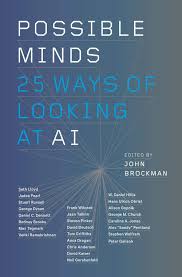
Possible minds

Rating:  2 stars

SHORT SUMMARY (272 words or less)

This book was a great foundational text to understand some concepts of Artificial Intelligence (AI).  From it, I learned about some technical parlance–value alignment, bounded optimality, deep learning, the list goes on.  Also, the book helped me think more deeply about some fundamental questions–how the Universe became self-aware through our (human) intelligence, and how human invention of AI may be a bridge to a more advanced species for understanding (potentially a non-human understanding) the Universe, and such understanding may be predicated on AI becoming self aware and increasingly powerful (“super-intelligent”).

Also, other random things I learned–how mosquitos find their target, and how that applies to deep learning probabilistic theories, the structural context for intelligence (the 3D human brain versus 2D neural networks), the potential revision to analog dominance (just as electrons are the seminal unit for bit computation, bits may be the seminal unit for the reversion back to analog), how in things like Google Maps, traffic data is initially fed into the system, and eventually the system itself controls the flow of traffic, even though no one is actually in control.  A lot of dense and disparate topics, but all interesting to think about.

My takeaways are too fragmented to synthesize into a direct thesis.  My main point of this book–it was great to read about AI from thinkers in the field, and to read about a spectrum from optimistic views of AI potential, to skeptical views of AI ascendancy, to alarming views of AI dominance.  In general, all essays in this book seemed to be a response to Norbert Weiner’s “The Human Use of Human Beings.”

Super Pumped – By Mike Issac

Rating:  1 star

SHORT SUMMARY (272 words or less)

First book I’ve read since moving to the Bay Area!

I didn’t take notes from reading, and it’s been a while since I finished the book.  There’s a lot to think about here, much of which has and will certainly will impact how I approach my job.  I won’t describe them here–descriptions would be too verbose–but the factual anecdotes of the industry and company were alone worth the read.  On the highest levels, though, some things that I affirmed–culture and personality matter.  Travis Kalanick basically invented an entire industry and scaled it to hundred of billions dollars in potential market opportunity.  Much of that was due to his drive and self-set cultural standards of how he defined success.  That cult of personality trickled down to people who bought the vision, and the momentum of the culture propagated.  But just as culture and personality matters on the way up, it matters too on the way down, and the trickle down culture is just has hard to shake.

And as with many “fall from grace” stories, sometimes good things can come from it.  I think what makes this “cautionary tale” unique is that it’s an example of how a toxic culture can potentially override myopic investor views of growth and market share.  Uber was big, but investors could only look away from the drama coming out of it for so long.  Or maybe that’s just the pop culture characterization of things–I’m sure it’s more complicated than that.  Just interesting to read this story at this time of record growth in the Valley but also with stories like WeWork’s failed IPO.

Super Pumped: The Battle for Uber, By Mike Issac

RATING

1 star

N/A = good but not on the scale

1 star = perspective supplementing

2 stars = perspective influencing

3 stars = perspective altering

SHORT SUMMARY (272 words or less)

First book I’ve read since moving to the Bay Area!

I didn’t take notes from reading, and it’s been a while since I finished the book.  There’s a lot to think about here, much of which has and will certainly will impact how I approach my job.  I won’t describe them here–descriptions would be too verbose–but the factual anecdotes of the industry and company were alone worth the read.  On the highest levels, though, some things that I affirmed–culture and personality matter.  Travis Kalanick basically invented an entire industry and scaled it to hundred of billions dollars in potential market opportunity.  Much of that was due to his drive and self-set cultural standards of how he defined success.  That cult of personality trickled down to people who bought the vision, and the momentum of the culture propagated.  But just as culture and personality matters on the way up, it matters too on the way down, and the trickle down culture is just has hard to shake.

And as with many “fall from grace” stories, sometimes good things can come from it.  I think what makes this “cautionary tale” unique is that it’s an example of how a toxic culture can potentially override myopic investor views of growth and market share.  Uber was big, but investors could only look away from the drama coming out of it for so long.  Or maybe that’s just the pop culture characterization of things–I’m sure it’s more complicated than that.  Just interesting to read this story at this time of record growth in the Valley but also with stories like WeWork’s failed IPO.
Possible Minds: 25 Ways of Looking At AI, A Collection of Essays Curated and Edited by John Brockman

Possible minds

RATING

2 stars

N/A = good but not on the scale

1 star = perspective supplementing

2 stars = perspective influencing

3 stars = perspective altering

SHORT SUMMARY (272 words or less)

—-

This book was a great foundational text to understand some concepts of Artificial Intelligence (AI).  From it, I learned about some technical parlance–value alignment, bounded optimality, deep learning, the list goes on.  Also, the book helped me think more deeply about some fundamental questions–how the Universe became self-aware through our (human) intelligence, and how human invention of AI may be a bridge to a more advanced species for understanding (potentially a non-human understanding) the Universe, and such understanding may be predicated on AI becoming self aware and increasingly powerful (“super-intelligent”).

Also, other random things I learned–how mosquitos find their target, and how that applies to deep learning probabilistic theories, the structural context for intelligence (the 3D human brain versus 2D neural networks), the potential revision to analog dominance (just as electrons are the seminal unit for bit computation, bits may be the seminal unit for the reversion back to analog), how in things like Google Maps, traffic data is initially fed into the system, and eventually the system itself controls the flow of traffic, even though no one is actually in control.  A lot of dense and disparate topics, but all interesting to think about.

My takeaways are too fragmented to synthesize into a direct thesis.  My main point of this book–it was great to read about AI from thinkers in the field, and to read about a spectrum from optimistic views of AI potential, to skeptical views of AI ascendancy, to alarming views of AI dominance.  In general, all essays in this book seemed to be a response to Norbert Weiner’s “The Human Use of Human Beings.”

—-

1493: Uncovering the New World Columbus Created, by Charles Mann

RATING

1 star

N/A = good but not on the scale

1 star = perspective supplementing

2 stars = perspective influencing

3 stars = perspective altering

SHORT SUMMARY (272 words or less)

I’ll be honest, after the introduction and the first chapter or two, I kind of lost interest in this one.  Not that the subject matter isn’t important though.  It was mainly a product of me taking too much time in between putting the book down and picking it back up, and by then, my mind was off to something else.

It is interesting to think about how one man and one year was a catalyst and demarcation line for our economic and ecological age, the homogenoscene.  The one thing I kept thinking about during the (brief) reading–the time of human history before 1493 must have seemed like modern times for those who were living in it, whether it be in BC times, medieval times, the Renaissance, etc.  And then 1493 occurred, East and West merging to spawn new modes of human civilization, and with a few hundred years of perspective, it’s seemingly obvious to think that anything and anyone before Columbus was surely living in ancient times.  It makes me wonder–will there be a future discovery as consequential (or even more so) that will almost certainly render us living right now in ancient times.  And what could that discovery be?  My mind automatically goes to something from out of this world (aliens and all that), but what if it is something native to Earth?  A new element or subatomic particle?  A new way to synthesize energy?  A new weapon of war or a tool of diplomacy?  So even though I didn’t really read the book, it was thought provoking enough for one star.

Bad Blood, by John Carreyrou

RATING

1 star

N/A = good but not on the scale

1 star = perspective supplementing

2 stars = perspective influencing

3 stars = perspective altering

SHORT SUMMARY(272 words or less)

I feel kind of bad giving this book one star, because it actually was a compelling read.  The author broke the Theranos story for the WSJ, which led to the dramatic downfall of one of Silicon Valley’s biggest con stories.  I gave it one star mainly because there was so much pop-culture overload at the time I read this.  An HBO documentary, a few podcasts, a bunch of articles, etc.  It basically saturated my interest in the story, but the book or author isn’t to blame.

Basically, this book is about how Elizabeth Holmes was able to con her investors, customers, employees, the media, and everyone else on her “groundbreaking” blood testing technology.  The idea was that Theranos, Holmes’ company, would be able to deliver wide reaching blood and DNA tests from a single drop of blood.  In actuality, her technology never worked, she kept up a facade and smoke and mirrors on the technology before it came crashing down.  She was able to pull this off because (1) she was well connected with legacy Valley investors who gave her credibility and (2) she was able to exploit Silicon Valley’s culture of “move fast and break things,” when there are inherent limitations in biotechnology to moving fast and breaking things.  For a while, everyone rode the train, but after the author’s reporting in the WSJ questions were asked, Feds came in to investigate, and Holmes’ net worth went from $4.5 billion to $0.

Takeaways?  Don’t believe everything you see?  There will always be con artists?  Ambition can conflate the desire to be a pioneer and the desire to be well known?

Zucked, by Roger McNamee

RATING

2 stars

N/A = good but not on the scale

1 star = perspective supplementing

2 stars = perspective influencing

3 stars = perspective altering

SHORT SUMMARY (272 words or less)

This book is packed with a lot of information.  It starts by discussing the history of tech startups in Silicon Valley and moves to a commentary on Facebook’s economic incentive systems.  The author’s main thesis is that Facebook should be regulated as a monopolistic platform.  The argument is partly based in historical economic and legal jurisprudence and partly based on corporate morality.  McNamee, an early FB investor, believes that FB’s economic incentives, namely user engagement and online advertising, encourage keeping users on site and using psychological tricks to do so.  That’s not really new, advertisers have been doing that forever.  The author’s argument is more rooted in the size and scale of impact that Facebook has, and that FB is essentially being used for social manipulation by anyone who can pay the right price.  McNamee talks about his views on how FB affected major geopolitical events–the 2016 US Presidential Election, the Brexit Vote, and the genocide against Rohingya Muslims in Myanmar.  His view is that FB and other platforms create filter bubbles for their users and echo chambers reenforced through exploitation of base human psychology.  Bad actors use these tools to create false narratives and opportunities for outside entities to influence large numbers of people through misinformation.  For McNamee, the combination of these pitfalls and FB’s vast reach and ostensible operation as a publishing platform lend itself to regulation.

It raises compelling anti-trust questions.  I don’t know where I fall on it, but I think at the very least, it would be interesting to see how existing anti-trust frameworks (and historical precedent) could be adapted to evaluate monopoly power in silicon valley.

“The Jungle and the Debate over Federal Meat Inspection” – a case study from the book Democracy by David Moss

Quick note, this book has many different case studies of events through US History.  These case studies are intended more to spark debate than they are to provide a history lesson.  For example, at the end of this case study, there’s no conclusion about what happened (I had to look it up myself).

SHORT SUMMARY (272 words or less)

As lame as reading a case study on the 19th and early 20th century meat industry might be, I found this fascinating.  The case study discusses oligopolies and price fixing that affected not just the meat industry but also the railroad industry.  Basically, the railroads consolidated into four large companies (The Big Four), and they were exerting price fixing strains on customers.  The meat industry benefited–as larger companies were able to extract more favorable rail rates.  Congress intervened to bust the railroad trust with the Interstate Commerce Act, but it took a long time to have teeth.

The meat industry was notorious for its terrible sanitation and work conditions, but Congress was impotent to act against them, due to the meat lobby.  Ultimately a book called “The Jungle” by Upton Sinclair as well as advocacy by progressive-era journalists called muckrakers turned public perception toward reform.  Teddy Rosevelt signed into law the Meat Inspection Act of 1906–and the case study focuses on the legislative negotiations during this process.  My biggest takeaway, however, was somewhat unrelated but it gave me hope.  Railroad trusts and meat industry collusion had been around since around the 1870s, but it took almost 40 years for regulation and reform to come fully to those industries.  It makes me hopeful for the times today–that issues may take a long time to resolve, perhaps past our lifetimes, so you have to do what you can during your life to push the needle that way.  Also, how the power of culture (in this case a book by Sinclair) can change public perception.

Becoming, by Michelle Obama

RATING

3 stars

N/A = good but not on the scale

1 star = perspective supplementing

2 stars = perspective influencing

3 stars = perspective altering

*No Long Summary*

SHORT SUMMARY (272 words or less):

I’ve been on a streak of three star books, and this one is no exception.  Instead of summarizing the book, I’ll summarize my takeaways.

Michelle Obama provides an honest and deeply reflective view of her journey, how she became who she is, and how she is still becoming who she hopes to be.  In these extraordinary times, it’s an important and inspiring memoir to read.  Not just for the grandeur symbolism of American optimism (rising from the south side of Chicago to the White House), but also for its relatability in the successes, set backs, fun, sorrow, and just plain living, that Obama recounts in her life.  It’s refreshing to hear her life story told with such authenticity and groundedness.

One of the themes in this book that I enjoyed was the idea of “swerving.”  How your life plan may take you one way or another, and sometimes that can largely be influenced by upbringing or personal philosophies, but every now and then, you can take a swerve.  It could be deliberate, it could be accidental.  Obama describes this concept early and often in her book:  a college boyfriend who “swerved” from his medical school path to pursue becoming a pro-football mascot; her brother who left his corporate career to coach basketball; her career change from a big law firm to public service.  At the end of the book, she recognizes that her biggest swerve came the day she went on a date with Barack, and how two people born with different backgrounds and innate influences complimented each other, supported each other, and had faith, but no guarantees, in their future together.

Year in Review – 2018

Previous years

2017 books

2016 books

COMPLETED (short summaries below)

“John Tyler” By Gary May

rating: N/A

“Origin Story” By David Christian

rating:  3 stars

“The Radical King” words of Martin Luther King Jr., organized and edited by Cornel West

rating:  3 stars

“Letter from Birmingham Jail, 1963” by Martin Luther King Jr.

rating:  3 stars

“Artemis” by Andy Weir

rating:  N/A

“Born a Crime” by Trevor Noah

rating:  3 stars

“Everybody Lies” By Seth Stephens-Davidowitz

rating:  1 star

Overview and next year goal

I read six books this year, which is far short of the ten I read in 2017 and the 24-book goal I set in the beginning of the year, but it’s ok.  I read multiple three star books this year, according to my scale below.

I hope to pick up the pace in 2019.  I’m not going to set a number like I did last year, but I will hope to read more in general.

IN PROGRESS

“Polk:  The Man Who Transformed the Presidency and America” By Walter R. Borneman

“Leonardo Da Vinci” By Walter Isaacson

SHORT SUMMARIES

John Tyler – By Gary May

Tyler

Rating:  N/A

SHORT SUMMARY (272 words or less):

John Tyler was not a good President.  His time in office was filled with many firsts, derived mostly from happenstance.  The first president to:  ascend to the Office upon the death of a President, be excommunicated by his own party, have a wife die in office, (re)marry in office, have a congressional override of a veto, avoid seeking a second term, and the most distinct honor of all, the first (and only) US President to support and serve for the Confederate States of America.  If those are the highlights for a President’s term, you know you’re dealing with a bad one.

Tyler’s biggest presidential accomplishment was the annexation of Texas.   His predecessors weighed on this issue hesitantly; Tyler pulled the trigger.  Tyler thought his legacy would be cemented with annexation.  Instead, it added more kindling for the fire and the fractious drumbeat for Civil War.  And later in life, when it came to his stance on that terrible war, he initially advocated for compromise between north and south, but ultimately supported Virginia secession and was elected to the Confederacy’s provisional Congress.  Take that in for a second, a former US president supporting and serving the Confederacy.

What else did he do?  Let’s see–piss off his own party by his stance on a national bank, issue a bunch of vetoes in Jacksonian style, sign an anti-impressment treaty with Great Britain, establish the Tyler Doctrine to expand American influence in the Pacific.

But none of this, Texas aside, was historically noteworthy, and even with Texas, Tyler wasn’t around to deal with the hard consequences of annexation.

That’s basically it.  Boring dude.  Bad president.

Origin Story – By David Christian

origin story

Rating:  3 stars

SHORT SUMMARY (272 words or less):

On the surface, this book attempts a big task:  to tell the story of the Universe, and ultimately the biological and social evolution of humans. A story from the Big Bang to the end of the Universe.  Of course, the book is more nuanced than that.  The real idea is to build a unified view, rooted in science, of how everything, including us, originated.  Hopefully, that common understanding will establish a starting platform from which science-based decisions and polices can be made.  Thus, the name for the book and also the underlying Big History Project.

The themes of Origin Story are important.  From the human perspective, if we don’t understand our origin, based on science and facts, then the ignorance that creeps in could ultimately distract and destroy our ability to sustain as a species.  In a larger sense, the origin story told here is humbling too–it give us a very real understanding that our mere existence in space and time is fleeting.

And yet, whether we know this or not, we go through our lives with a remarkable ability to understand our place in all of it. This is incredibly profound.  And we have developed cognitive tricks (like language, knowledge sharing, culture, social customs) to change our evolutionary trajectory faster than our biology ever would allow.

My take away from this book, and others read recently, is that culture matters.  And a culture rooted in science and scientific inquiry may be the only path forward for our sustained existence.

I’ll stop short of saying that this is a must read; however the information contained within it is a must know.

The Radical King – Words of Dr. Martin Luther King Jr., Organized and Edited by Cornel West

book cover

Rating:  3 stars

SHORT SUMMARY (272 words or less):

What can I really say in 272 words?  Read this book.  It will change your perspective.

It’s an impossible task to summarize Dr. King’s words.  So instead of doing that, just some random thoughts:

-Cornel West has a theory that King has been mythologized and “Santa Claus-ified.”  To the point where his own words today have been scrubbed so clean that they have separated from the underlying message and can be used even by those, ignorantly or deliberately, who entirely ignore King’s larger points.  I have been guilty of that, quoting MLK because the words sound nice.  But this is the first time that I have truly listened to what he had to say.

-West’s thesis in putting together this collection is to demonstrate King’s “Gandhian” view of radical love–direct action to unconditionally oppose injustice while maintaining unconditional love for the active and passive oppressors instituting these injustices.

-King’s evolution on radical love ebbed and flowed with human feelings of victory and defeat.  His optimism is clear in many speeches, and his resignations also become clear too, particularly toward the end of his life.

-I’m now not surprised at how controversial King was during the Civil Rights Era.  He posed a threat to the status quo.  He lost his life because of that.  His movement represented a tangible mechanism to awaken the country’s collective soul, at a time in American History when society was most susceptible to awakening.  His message of economic and social transformation started with the struggle of African Americans, but if fully implemented, would have likely spoken for all Americans who had been subjugated or marginalized.

-Read this book.

Letter from Birmingham Jail, 1963 – By Martin Luther King Jr.

Rating:  3 stars

SHORT SUMMARY (272 words or less):

In a newspaper, smuggled into Dr. King’s jail cell, eight clergymen wrote a statement against his protests in Birmingham.  King responded, writing in the newspaper margins, with his open letter.  The result is one of the most important documents of the Civil Rights Movement.

In this letter, King defines and defends direct action.  The most impactful lesson, for me, is how King ties broad philosophical themes together and places the social and economic justice movement as the next step of a global, biblical, historical, and uniquely American journey towards freedom.  His philosophy of direct action is simple enough to allow people to participate immediately.  His thoughts aren’t lost in the theoretical; they apply in the real world.

Dr. King promotes an assertive case for a movement too often seen as being only passivist in character.  His movement was nonviolent and passivist, but it was not passive.  It was active civil disobedience.  Dr. King defends the urgency of his words, casting his crusade for justice as applicable for oppressors and oppressed alike.  King’s belief is that direct action elicits a tension in the collective social mind and soul, and through this tension, justice wins in the long run.  But, I don’t believe Dr. King sees his movement’s success as inevitable or guaranteed.  Instead, he believes that the immediacy of civil disobedience can lead to this inevitability.  In other words, Dr. King’s words stand on the pedestal of his long moral arc, but they are meant as a call to action in the here and in the now against injustice.  I think that aspect of Dr. King’s legacy was lost on me until now.

Artemis – By Andy Weir

220px-Artemis-Andy_Weir_(2017)

Rating:  N/A

SHORT SUMMARY (272 words or less):

This is the first fiction book I have reviewed.

I really enjoyed The Martian, probably one of my favorite books in recent memory. Artemis was entertaining, but I couldn’t pull many broad themes from it. Maybe everything doesn’t need to have a bigger theme, though, and when I keep that perspective in mind, the book was enjoyable. It tells the story of life on a Moon colony through the eyes of a blue collar worker wrapped in a get rich quick scheme. The main takeaway I had from this is how visions of a not so distant future still will have elements that make humans humans: power, corruption, economics, race, culture, religion, etc.

It was interesting to think that a future society on a moon colony will still have the hallmarks and deficiencies of life on earth.

Not quite The Martian, not really enough for a “star” on my scale, but I’m glad I read it for what it was.

Born a Crime – By Trevor Noah

9780399588174

Rating:  3 stars

SHORT SUMMARY (272 words or less):

I was surprised to give three stars to this book.  Not to indict Noah’s relevancy or importance.  Instead, I saw this biography as an opportunity to understand a life perspective told with an interesting voice.

But this book resonated deeply.  Trevor Noah speaks with a level of sincerity about his upbringing in South Africa–not to cast his story as a rags to riches rise, but rather to provide an honest window into a life raised post-Apartheid.  His story is an allegory, of the absurd racial constructs that make his legal race unclassifiable, to the confines and pleasures of life in South Africa, to the stories of childhood that are simultaneously universally relatable, culturally specific, and uniquely individual.  He tells his story in a way to ask both the big questions and small questions at the same time.

Lately, I have been thinking a lot of what stories my young daughter will have from her childhood—and how to make her experiences real and relevant for the world in front of her.  My lesson from this book:  there are joys, sorrows, wins and losses, in every life lived, and it’s the background culture and society that makes those stories interesting and expansive.  Take the lessons from your own life, and apply it to your personal philosophy, but understand that the narrative for your children is mostly out of your control.  Noah speaks poetically of his mother, whose life knew struggles different than his own, but who’s influence undoubtedly impacted his own quest to find himself.  Perhaps this is a three star because it echoes some stories told within my own family.

Everybody Lies – By Seth Stephens-Davidowitz

28512671

Rating:  1 star

SHORT SUMMARY (272 words or less):

This book focuses on big data analysis.  How large data sets enable a more honest view into human trends.  The author theorizes four virtues of big data:  (1) size; (2) honesty; (3) unique segmentation opportunities; and (4) untapped data sources.  As a main example, the author’s theory is that people type into Google things they otherwise would not reveal in public, and the database size allows us to learn more revealing tendencies in population segments.

I think this is an important book.  The underlying theories are interesting, and big data analysis already impacts most aspects of our lives.  For example, A/B testing keeps you on that app or website just a little longer than you otherwise would stay.  It’s important to understand these assumptions.

The book seems to follow two threads.  One is the specific trends that are observed from big data analysis.  You can read about them below, the most interesting to me was the doppelgänger analysis.  The second involves the virtues of big data analysis itself.  It’s here where I have some comments, not doubts, on the assumptions.  Can the analysis become self fulfilling?  After reading this, I see big data sets as a land rush that’s soon ending.  As data companies consolidate into larger data sets, is there room for other sets come into existence?  Or, are we starting from a limited number of sources to determine trends, theories, etc., and then perpetuating those prophecies.  In other words, if Google is a starting point, is there room for another Google-like data source, years down the line, to update the resulting conclusions?  Do we stop buying strawberry pop tarts?

John Tyler, By Gary May

RATING

N/A

N/A = good but not on the scale

1 star = perspective supplementing

2 stars = perspective influencing

3 stars = perspective altering

SHORT SUMMARY (272 words or less)

John Tyler was not a good President.  His time in office was filled with many firsts, derived mostly from happenstance.  The first president to:  ascend to the Office upon the death of a President, be excommunicated by his own party, have a wife die in office, (re)marry in office, have a congressional override of a veto, avoid seeking a second term, and the most distinct honor of all, the first (and only) US President to support and serve for the Confederate States of America.  If those are the highlights for a President’s term, you know you’re dealing with a bad one.

Tyler’s biggest presidential accomplishment was the annexation of Texas.   His predecessors weighed on this issue hesitantly; Tyler pulled the trigger.  Tyler thought his legacy would be cemented with annexation.  Instead, it added more kindling for the fire and the fractious drumbeat for Civil War.  And later in life, when it came to his stance on that terrible war, he initially advocated for compromise between north and south, but ultimately supported Virginia secession and was elected to the Confederacy’s provisional Congress.  Take that in for a second, a former US president supporting and serving the Confederacy.

What else did he do?  Let’s see–piss off his own party by his stance on a national bank, issue a bunch of vetoes in Jacksonian style, sign an anti-impressment treaty with Great Britain, establish the Tyler Doctrine to expand American influence in the Pacific.

But none of this, Texas aside, was historically noteworthy, and even with Texas, Tyler wasn’t around to deal with the hard consequences of annexation.

That’s basically it.  Boring dude.  Bad president.

LONG SUMMARY (Key takeaways–more thoughts)

For some reason, I’m really resentful about writing this summary.  It has taken me forever to read this book, and it has been painful to write a summary of one of the worst presidents in US History.

But for sake of completeness, I suppose, here it goes.

Tyler’s presidency feels like an amorphous blob.  It’s hard to figure out what his time in office really stood for.  And it’s hard to point to one specific event or decision that made him a terrible president–though if I had to choose, I’d say that his post-presidency support of Virginia secession and service to the Confederate States of America would pretty much sum it up.  Anytime you decide to support a rebel army against the country whose army you commanded in chief and whose Constitution you swore to “preserve, protect and defend,” then you’re a pretty terrible leader.

Even his biggest accomplishment, the annexation of Texas, momentous from a 20th/21st century lens, was actual a very dangerous decision for the country at the time.  Previous presidents had considered the Texas question.  John Quincy Adams tried to buy a portion of it from Mexico, but they rejected the request.  Jackson ultimately recognized Texas as an independent country from Mexico, but only after deliberate thought and only after his successor, Martin Van Buren, was elected to administer the potential implications.   Even Jackson knew that open support for the Texas Republic or Texas admittance could throw the country into chaos.

Tyler, on the other hand, seemed obsessed with admitting Texas without such deliberate thought.  Texas was a thorny issue because it threatened to upset the balance between free and slave states.  It also threatened to precipitate a major war with Mexico.  Both of these premonitions came to bear.  Tyler initially sought to annex Texas on a national coalition of northerns and southerners (e.g., advocating for the annexation for Oregon on a later date), but when he lost Whig support, he proceeded anyway, which signaled his soft support for the Southern cause on annexation.  The Southern enthusiasm for Texas was rooted in a belief that (1) it was another slave state that would dispatch two more senators and additional electors for Presidential elections and (2) the belief that Texas could actually be carved up into five states to increase the Southern hold on national political power.

Of course, it is hard to imagine a modern America without Texas.  So in the long haul, I guess that the addition of Texas is an achievement that stood the test of time.  But it came with a bloody cost–a war with Mexico and an acceleration of tensions for a fractured country on an inevitable path to Civil War.  The Texas decision was reckless, not because ultimately Texas admission stood the test of history, but instead for what it could have done to the country at the time the decision was made.  When the crystal ball showed war and further division, Tyler proceeded anyway.

Aside from Texas, Tyler did not do very much.  He was born into privilege, and his early years of government service and achievement could have been accomplished only by someone of privilege.  Tyler won election to the House of Representatives from Virginia at the age of 26.  Tyler won his Senate seat at the age of 36.  He became the youngest President (at the time) after the death of the oldest President (at the time).

To finance his term as a US Senator, he callously sold his beloved family slave, Ann Eliza, at a public auction.  I think these side notes in history must be remembered.  A human being was sold so that Tyler could go to Washington.  Tyler was a slave owner and brought slaves with him to the White House once he assumed the Presidency.

When he became President, he was quickly abandoned by his own Whig Party.  Tyler was unable to build a coalition with the intellectual force behind the Party, Henry Clay, and disagreements on the national bank issue and Tyler’s perpetual veto of Whig bank legislation lead to him being banished from the Whig Party.  Thus, another fault in Tyler’s presidency–he was unable to compromise.  The author makes a point in the epilogue about how the best presidents are not ideologues but rather are pragmatists.  I’ll see what I think about that, but at least with Tyler, his purist views on the bank and his inability to compromise with his party contributed to a very ineffective presidency.  I mean, to be kicked out of your own part as President, that is pretty remarkable to think about in a modern context.

There really is not much else to write about.  The Treaty of Washington (aka the Webster-Ashburton Treaty) was signed by Tyler with Great Britain to end impressment of US ships, but that was mainly to protect Southern slave owners from British emancipation doctrine.  The book says that Tyler expanded US influence in the Pacific (aka the Tyler Doctrine), but I don’t really see how he did that in a long standing or impactful way.

What else?  As mentioned, he betrayed his country and joined the Confederacy.  When he died, he had no formal funeral ceremonies in the United States, but the Confederate States treated him like a hero.

I guess that sums it up.

On to Polk.