Previous Years
COMPLETED (short summaries below)
“Narrative Economics” by Robert Shiller
rating: 2 stars
“The Adventures of Huckleberry Finn” by Mark Twain
rating: 2 stars
“AI Superpowers” by Kai-Fu Lee
rating: N/A
“Moving Up Without Losing your Way” by Jennifer Morton
rating: N/A
“To Start A War” by Robert Draper
rating: 3 stars
Overview and next year goal
When the COVID-19 lockdowns first started, I imagined that I would have plenty of time to read more in 2020. But unexpectedly, I found myself with *less* free time than before. No commute meant no audiobooks on the way home. Limited childcare meant waiting until the evening to exercise, relax, decompress, etc. But overall, that’s ok. As bad as 2020 was on the macro-level, I still have great memories of quality family time, a time that I will always treasure.
I read five books, one being a three star. I look forward to what 2021 brings.
IN PROGRESS
“Polk: The Man Who Transformed the Presidency and America” By Walter R. Borneman (yep…still)
“Ten Lessons for a Post-Pandemic World” by Fareed Zakaria
“A Promised Land” by Barack Obama
SHORT SUMMARIES
Narrative Economics – by Robert Shiller

Rating: 2 stars
SHORT SUMMARY (272 words or less)
—-
When you ask people to tell you their life philosophy, they struggle to find the words. But if you want to hear their values, ask for their stories. This is the cultural, psychological, and historical power of narratives. Robert Shiller extends this power to behavioral economics. As an aside, Shiller won a Nobel Prize in economics and he’s named in the Case-Shiller home price index. This book is important especially today, quarantined during the COVID pandemic and staring down a potentially deep and dark recession ahead. The language of the book – epidemics, viruses, contagion, infection rates – is eerily prescient.
The thesis: economic fluctuations are driven by oversimplified and easily transmitted economic narratives — stories with high contagion rates. Such narratives are typically ignored by classical economics, but have profound impacts on economic cycles. Narratives are not necessarily rooted in factual beliefs, but are more often rooted in perception — how people perceive expert observers of a narrative to react, how narratives are valued in a cultural context, and the perception of certain narratives relative to others stronger narratives.
But what does this practically mean? Well, potentially a lot. Are brands popular because of their products or because of their adjacency to other contagious narratives? Does the stock market move on the Keynesian explanation of traders predicting what the experts think? Do economic recessions end when there’s no more social capital in acting frugal? The behavioral context analysis of these examples and others will reshape my understanding of economic events. The big question today: how does this framework apply to COVID’s economic impact?
Oh, I also learned a lot about the Gold Standard.
—-
The Adventures of Huckleberry Finn – by Mark Twain
Rating: 2 stars
SHORT SUMMARY (272 words or less)
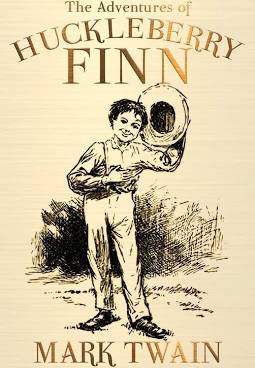
It takes a special type of arrogance (or ignorance) to rate the most popular work by Mark Twain as “2 stars.” But this isn’t an indictment of the book. I found it incredibly enjoyable and insightful–it just didn’t alter my perspective like other books have. The book was interesting in a several ways to me: the parallels of Huck and Jim’s journey as being a journey through American History (both physical expansion and expansion on and limitations on race); the fact that this book was published in the time period that it was, and the ensuing social commentary of it; the evolution of the story from a simple children’s book (like The Adventures of Tom Sawyer) to a serious literary work; a footnote in the book that said that when Huck and Jim were on the boat, Twain initially had planned for them to turn North towards Ohio where Jim would receive his freedom, but after pausing from writing for several years, he picked his manuscript back up and had Huck and Jim go down south. That last element was insightful for me–Twain’s masterpiece came not in an instant strike of genius, but as something he worked and toiled over for years, taking long breaks and picking things back up.
Surprisingly I did not read this book when I was younger. But I see why it is such an keystone piece of American literature.
I’m glad I read this book.
AI Superpowers – by Kai-Fu Lee
Rating: N/A
SHORT SUMMARY (272 words or less)
—-
I started off excited to read this book, but as it went on, I liked it less and less. Not because of the writing or because of the subject matter. But mainly because of the broad predictions given by the book that I felt were posed with inevitability and infallibility without compelling context. I guess that was the purpose of the book, and maybe I’m to blame for expecting something different. I wanted more commentary that analogized historical economic/technology shifts (printed paper, currency, trade, energy) to emerging AI.
I didn’t finish the book, but from what I read, here are some nuggets:
-China is an ascending AI power in a world where AI will be crucial to economic security and global influence. The author proposes that AI is a winner take all economy, with only a handful of companies in the US and China poised to dominate. That sounds realistic. As a result, the author proposes that the biggest threat of AI is how it will enable widening economic gaps and social strife that derives.
-While we wait for the next AI breakthrough, the volume of data will be what feeds deep learning models and AI industries around the world.
-Chinese startups shifted from emulation to innovation.
-Deep learning/neural networks were once considered a fringe part of AI but now are mainstream. Deep learning does this by taking massive amounts of data to train itself–to recognize patterns and correlations to the desired outcome. This training is easier when data is labeled with the desired outcome (e.g. recognize a cat by looking at billions of pictures labeled cat/no cat).
Moving Up Without Losing your Way – by Jennifer Morton

Rating: N/A
SHORT SUMMARY (272 words or less)
The main thesis of this book is that students from disadvantaged economic classes (aka “strivers”) have many costs when it comes to pursuing upward economic mobility. We typically think of the traditional costs — student loans, part time jobs, time investments, etc. The additional costs that the author highlights are “ethical costs.” The idea is that in pursuit of economic advancement, strivers often have to make hard decisions–leaving their families (where they are often in caretaker roles), their communities, their culture–to adapt to their new strata.
Overall, the idea is that while everyone has tradeoffs in the career and economic pursuits, strivers have additional costs that are emotional and ethical, and those costs can often hold back people from fully pursuing the options in front of them.
I thought this was certainly an interesting idea and a good book to explore. Beyond that, I did not get too much actionable information from it, which is why I gave it zero stars. It still was a worthwhile read.
To Start A War – by Robert Draper
Rating: 3 stars
SHORT SUMMARY (272 words or less)
—
Perhaps no President has rehabilitated his historical image as drastically in such a short time as President George W. Bush. Even if you didn’t like his policies or didn’t vote for him, the contrast between him and President Trump is stark. It neutralizes (or at least gives you selective amnesia) on the missteps during W’s administration. This book takes a historical reflection, two decades in the making, on perhaps the biggest unforced error in US foreign policy in the 21st century–the US invasion of Iraq in March 2003.
I was a college freshman on 9/11 and a sophomore when President Bush gave his St. Patrick’s Day address to the country announcing an invasion of Iraq. That by itself took me on a trip down memory lane.
However, as important as that historical context is, this book gets two stars because of its commentary on the perils of Bush’s style of leadership. After 9/11, Bush displayed a previously unseen streak of decisiveness, eloquence, unity, and clarity of purpose. That was very well received by the public, especially after the divisive 2000 election and Florida recount. But as he pivoted to Iraq, it seemed like his mind was made up beforehand and the facts were secondary. Repeatedly, the book recounts how his administration encouraged compliance and how his cabinet was incentivized to give thoughts on what they thought their boss would want to hear, rather than what their boss needed to hear.
We’ve all had “bad bosses” in our careers. This book is ultimately a lesson in management–surround yourself with diverse opinions, listen to dissenters, gather the facts, and *then* be decisive.
—
 Book Summaries. Less than 272 words.