
RATING
2 stars
N/A = good but not on the scale
1 star = perspective supplementing
2 stars = perspective influencing
3 stars = perspective altering
SHORT SUMMARY (272 words or less)
—-
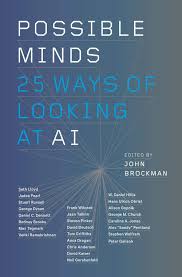
This book was a great foundational text to understand some concepts of Artificial Intelligence (AI). From it, I learned about some technical parlance–value alignment, bounded optimality, deep learning, the list goes on. Also, the book helped me think more deeply about some fundamental questions–how the Universe became self-aware through our (human) intelligence, and how human invention of AI may be a bridge to a more advanced species for understanding (potentially a non-human understanding) the Universe, and such understanding may be predicated on AI becoming self aware and increasingly powerful (“super-intelligent”).
Also, other random things I learned–how mosquitos find their target, and how that applies to deep learning probabilistic theories, the structural context for intelligence (the 3D human brain versus 2D neural networks), the potential revision to analog dominance (just as electrons are the seminal unit for bit computation, bits may be the seminal unit for the reversion back to analog), how in things like Google Maps, traffic data is initially fed into the system, and eventually the system itself controls the flow of traffic, even though no one is actually in control. A lot of dense and disparate topics, but all interesting to think about.
My takeaways are too fragmented to synthesize into a direct thesis. My main point of this book–it was great to read about AI from thinkers in the field, and to read about a spectrum from optimistic views of AI potential, to skeptical views of AI ascendancy, to alarming views of AI dominance. In general, all essays in this book seemed to be a response to Norbert Weiner’s “The Human Use of Human Beings.”
—-
 Book Summaries. Less than 272 words.
One thought on “Possible Minds: 25 Ways of Looking At AI, A Collection of Essays Curated and Edited by John Brockman”