RATING
1 star
N/A = good but not on the scale
1 star = perspective supplementing
2 stars = perspective influencing
3 stars = perspective altering
LONG SUMMARY & SHORT SUMMARY
Note: No short summary since I didn’t finish the book. It was interesting enough, but I started losing interest about 1/3 of the way in.
Started June 19, 2017:
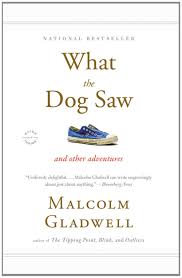
I actually read this book a few years ago, but I decided to give it another listen, and it’s not very long. The reason I reopened this book is because I remember reading the story about the dog whisperer, and I forgot how Gladwell describes his abilities to handle tough dogs. My parents have these two Jack Russell/Chiwawa mix dogs, and though they are good to them, they are extremely territorial and protective. I’m naturally scared of dogs, so when I go there to visit, we have to keep the dogs away. It made me wonder about the namesake dog story in this book, so I figured I’d revisit the whole thing.
This book is a series of short stories by Gladwell composed from his writing at The New Yorker. Like most Gladwell pieces, the storytelling is captivating. I also find that given how he threads the stories together, there can be a potential to confuse correlation with causation, and his simplicity in story telling might sometimes oversimplify incredibly complex issues. So grain of salt.
Here, I won’t summarize each short story, but will rather pull thigns that I find to be interesting or memorable.
Short story #1: The Pitchman
-This one is about Ron Popeil and his ability to sell infomercial product, including the Veg-o-Matic. A lot about Popeil’s sale style here, but one memorable statement was how a true seller sees a group of 25 people and tries to sell to 20 of them and keep the remaining 5 people around as the seed for the next presentation they are going to give. Interesting thought.
Short story #2: The Ketchup Conundrum
-This story is about Heniz Ketchup’s ability to dominate the Ketchup market and how competitor products haven’t taken that dominance away. Analogies made to French’s vs. Grey Poupon Dijon, and also entries of multiple pasta sauce competitors. The story describes this guy, Howard Muskovitz, who came up with this taste differentiation theory. That for a lot of foods, people prefer a spectrum of preferences. Mustard, pasta sauce, etc. But ketchup for some reason is different. Once you create a spectrum of ketchup choices, those other choices are seen as sauces instead of condiments for most consumers. Gladwell also talks about the harmony of the five tastes: sweet, sour, bitter, salt, umami, and how Heinz unifies the tastes. Other products do this, mainly Coke and Pepsi. If you compare store brand ketchup or cola, you can detect the five (or less) tastes individually, like specific notes spiking on a musical instrument. When you have a harmonious product, it blends together like a symphony.
Short story #3: Blowing Up
This one is about Nassim Taleb, of Black Swan fame. It’s a description of Taleb’s option investing strategy. Making small bets on fat tail options that have a relatively low likelihood of “winning.” The idea is that Taleb buys calls and puts at low-probability, low-cost events. On most days, Taleb’s fund loses money, but when a Black Swan event (an event unforeseen and unpredictable that disrupts a rational market) happens, Taleb’s fund wins big. He’s made a fortune in the post-9/11 crash and in the 2008 financial crisis. Gladwell compares him to traditional option sellers, who make a fortune when markets act predictably but lose it all when there’s a Black Swan event.
 Book Summaries. Less than 272 words.
One thought on “What The Dog Saw, By Malcom Gladwell”