RATING
1 star
N/A = good but not on the scale
1 star = perspective supplementing
2 stars = perspective influencing
3 stars = perspective altering
SHORT SUMMARY (272 words or less)
I guess good things can come out of Ohio. The Wright brothers’ inventiveness and determination was shaped by Ohio and Dayton culture. In fact, during the late 1800s, Dayton was a hotbed for inventors with among the highest per capita number of patents issued by the USPTO.
Wilbur (older) and Orville did not have any formal training or advanced education. Their parents were not wealthy or well connected, but they did encourage their children’s curiosity and resilience. The father once brought home a toy airplane from France for his young kids, and years later when a German aviation pioneer died, Wilbur’s dormant interest in manned flight was activated.
The brothers first opened a print shop and later a bicycle shop. In 1899, Wilbur wrote a letter to the Smithsonian Institute requesting copies of any aviation publications. The brothers decided to attempt building a manned aviation aircraft and moved to Kitty Hawk due to the advantageous wind conditions. They built a bunch of gliders to focus on flight skill over structure. Eventually, they built a flying machine and on December 17 1903, Orville flew the Flyer 1 for 12 seconds. They had the foresight to take a picture of the event even with the nascent camera technology of the time.
In subsequent years, they developed the Flyer 3, and engaged in a contract with the French government. They also were granted a patent for their flying machines. They did, though, get bogged down in a patent war, which diverted their ability to perfect their machines further, which according to some historians, delayed the progress of American aviation.
LONG SUMMARY
-Orville and Wilbur Wright grew up in Dayton, Ohio. One of them, I think Wilbur, once said: “If I were to give a young man advice on how to succeed in life, I would say to him, pick out a good mother and father, and begin life in Ohio.” The Michigan Man in me cringes at that, but it’s a pretty cool quote.
-The Wright brothers’ father was an intellectual guy, and instilled curiosity and a thirst for learning in his children. He had a pretty big collection of books by authors like Twain, Irving, Milton, Gibbons and Virgil.
-His dad also had a good quote: “All the money anyone ever needs in life is just enough to prevent being a burden on others.”
-While I’m on a quoting frenzy, here’s another good one from Orville later in life after being famous: “To say we had no special advantages . . . the greatest thing in our favor was growing up in a family where there was always much encouragement to intellectual curiosity.”
-One day while playing hockey, Wilbur was hit in the face by a kid who would grow up to be a horrible serial killer in Ohio. As a result of the injury, Wilbur had to put off his plans to attend Yale and he ended up staying at home, caring for his mother who had tuberculosis (and later died from it). Because he stayed at home and skipped Yale, he immersed himself in reading, something the author foreshadows as a precursor to his interest in aviation.
-The brothers started a printing press shop in their early years (late teens, early 20s) and put out a local publication for a couple of years. After that, they opened a bicycle shop. The author makes it a point to say how revolutionary bicycles were at the time (late 1800s). Gone were the days of the big wheel bikes, these “safety” bicycles were seen as one of the most revolutionizing inventions–good for mobility, health and overall wellness. One interesting thing was how many people at that time commented about how bicycles were a moral evil. That they would encourage youth to travel far distances away from home, take them away from their families and their books, and would lead to general debauchery. It seems like every generation kind of overreacts to new technology at the time under the pretense that it will destroy the children. I remember reading that people once thought that about books themselves, that they would lead to fanatical worship of the dark arts. It’s something to keep in mind before going off on the all-too-easy “kids these days” rant.
-The late 1800s were a time of rabid inventing, as new world inventions such as the camera and sewing machine were popping up everywhere. According to Patent Office statistics at the time, Dayton was a hot bed for inventive activity, one of the highest inthe country on a per capita basis.
-The death of German aviation experimentor Otto Lilienthal sparked a dormant interest in Wilbur Wright. When the brothers were kids, their father gave them a toy airplane from France, and they had tinkered with it as children. Lilienthal’s research and death inspired the brothers wonder about manned flight.
-Wilbur Wright wrote a letter to the Smithsonian Institute on May 30, 1899. The author states that this was perhaps one of the most significant letters written in technological history. The letter, a mere two pages long, explains Wilbur’s interest in pursuing manned flight, a brief background of the (early) research he has conducted, and a request for copies of any papers held by the Smithsonian Institute on this topic.
-The book makes an interesting point, that neither of the brothers had any formal education, weren’t from a wealthy family, and didn’t have many connections to high-powered people. What they had was their curiosity, their intelligence, their resilience, and their willingness to try, to fail and to learn.
-The Wright Brothers chose Kitty Hawk, NC after writing to the US Weather Bureau (now the National Weather Service). They received information from the Kitty Hawk location and decided had the best wind conditions together with the sand to manage the multiple flight attempts. The brothers realized that the reason Lilienthal’s attempts failed is because he prioritized structure over skill, and they reasoned that just like birds, flying machines need to adapt mid flight, something that could only be accomplished by a human through experience in the air. So they built a bunch of gliders.
-Interesting quote (or paraphrase): Carelessness is far more dangerous than taking on known risks.
-The brothers first focused on perfecting their in-air skill, believing that during actual air flight, they wouldn’t have time to think about how to react to weather and wind conditions, but instead that they had to know what to do by instinct. Which they believed came from practice. After perfecting these skills, they worked on having an engine and propellers built.
-It’s an unknown thing, but the Wright Brothers were actually pretty ground breaking in their propeller innovations. They learned how propeller technology worked, and studied it with rigor.
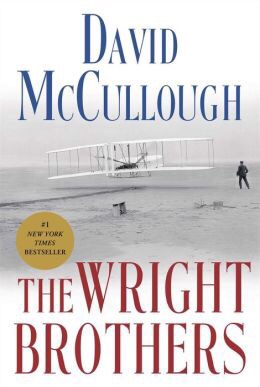
-The first flight took place on December 17, 1903. Orville won a coin toss and flew first. Their Flyer 1 flew for 120 feet and the flight lasted for only 12 seconds. They ended up flying three more times that day, at a maximum distance of 852 feet for 59 seconds. The actually purchased a camera and had the event photographed, leading to a picture of one of the most iconic moments in World History:

-Interestingly enough, the Wright Brothers had a bit of competition to become the first in flight from Samuel Langley. Langley had been given a grant by the federal government to develop his Aerodrome. It crashed twice in late 1903, days before the Flyer 1 took flight. I forget the actual number but there was some stat mentioned of how the government spent tens of thousands of dollars on a flyer that did not work, while the Wright Brothers spend merely a few thousand (maybe even just a thousand), primarily from modest proceeds from their bicycle shop, to build their successful flying machine.
-After the 1903 flights, the Wright Brothers went back up to Dayton to test out newer versions of their flyer. It is interesting to me how although the brothers had achieved history, they still had to work on refining their design to make it plausible to the public. After the 1903 flight, there wasn’t much significant press about the flight. So they still had to make a better version of the flyer to appeal to the public. They tested the iterations at Huffman Prairie field north of Dayton.
-It took them about 2 years to perfect their design with two iterations. Finally, their Flyer 3 was getting some buzz. The Wright Brothers initially wrote to the US Government, specifically the Department of War which passed on providing more funding since it did not see significant applicability. The French government, however, did invest a substantial amount of money. They delivered a test model A to the French government.
-In 1906, the Wright Brothers were granted their first patent on their plane, US Patent No. 821393. As a patent attorney, I find this to be pretty interesting, and I will certainly read the patent with the nerdiest enthusiasm.
 Book Summaries. Less than 272 words.
2 thoughts on “The Wright Brothers, by David McCullough”